Uhlmann Purchasing in figures
In the past business year, Uhlmann had approximately 450 suppliers for production material (PM) and around 700 for non-production material (NPM). The purchasing volume amounted to some 90 million euros for PM and 45 million euros for NPM. From January to September 2021, there were 660,387 BOM requirements to be covered, which is around 18,000 items more than in the same period in 2020. More than 45,000 items are stored in our high-bay warehouse with approximately 900 to 1000 goods receipts per day.
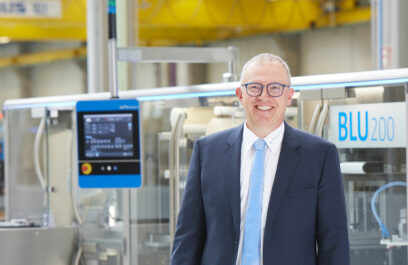
The Supply Chain business unit employs more than 100 people, from planning to purchasing, goods receiving, picking, internal transport, import/export and shipping. “A fantastic team that gives its best each and every day,” says Torsten Pfalzgraf.
.
pactuell: Mr. Pfalzgraf, we are hearing from many sources that components are in short supply. What is the reason for this?
Torsten Pfalzgraf: We are living in a globally connected world; may I suggest you check out VUCA World on Google. Coronavirus has made this interdependence more than clear. And it all came together: We saw uncontrollable economic lockdowns all over the world. And suddenly, suppliers were unable to deliver. Add to that the effect of the US-China trade dispute in 2019: all Western countries stopped ordering their electronic chips from China and started sourcing them exclusively from TSMC in Taiwan. This caused the market to overheat due to demand outstripping supply. Then came the Suez Canal ship blockage and the COVID-related closure of major ports in China in June and August 2021. On top of that, we saw demand spike in many sectors after the lockdowns.
Nevertheless, for us, the coronavirus situation also opens up a window of opportunity as it will lead to the regionalization of procurement markets in Europe as well. Supply chain laws and consumer-driven demand for sustainability will support this trend.
pactuell: Does all this also affect our own assembly operations and hence our delivery times?
Pfalzgraf: Yes, unfortunately it does, and I know how all our colleagues in assembly, the control stations and the SCM BU are struggling to get all the parts together we need to build our products. We have a great team spirit, here, that goes beyond divisional boundaries. This is the only way we can meet this challenge together, even if it does sometimes push us to our limits.
pactuell: How is Purchasing dealing with this volatile situation?
Pfalzgraf: We already responded to the foreseeable impact of coronavirus on the procurement market back in early spring of 2020, and established a kind of prevention system. In the SCM BU, daily shop floor meetings to discuss ways of resolving issues in the value creation process have been common practice for years now. Transparency and listening closely to suppliers as well as comparing notes with our Excellence-United colleagues, purchasing colleagues from networks, or the German Association for Supply Chain Management, Procurement and Logistics, are all very important. It is crucial to constantly provide new momentum –- be it through a supplier day like the one held in July 2021, to which we personally invited the managers of specific suppliers, thank-you letters to selected suppliers, or an event like the “After summer vacation” campaign launched by the strategic buyers during which we visited more than 20 suppliers on site.
pactuell: That sounds like a very intensive supplier management policy …
Pfalzgraf: The partnership with our suppliers is very important to me. This sets us apart from many of our competitors. Rather than “hammering” our suppliers, we have to look at things on a case-by-case basis. The fact is that for many high-tech companies, we are not their biggest customer. In cases such as these, we also act in concert with our management board. Appealing to a supplier’s sense of social responsibility at management level is another aspect; because by supplying their products, they are playing a significant role in supporting the vaccination campaign or the production of vital medicines in developing and emerging countries.
pactuell: Are there any signs that the situation will improve?
Pfalzgraf: According to talks with suppliers, purchasing colleagues from other companies, and the relevant trade journals, the volatile situation looks set to continue until summer of next year. In the newspapers, we read about week-long assembly line stoppages at Opel or Daimler. Wherever possible, materials are already being stocked up in advance, like at Axito Germany, for example, where we already started to build up sufficient stocks of raw materials back in spring, so we haven’t encountered any raw material problems to date. We are still moving ahead cautiously and must continue to react flexibly, keep calm, and work well together to master this crisis. And we will!