pactuell: Mr. Blersch, as Strategic Product Manager, you are constantly monitoring market and customer demand. What can you tell us about the current trends?
Werner Blersch: When I compare the two dosage forms of OSD (Oral Solid Dose), i.e. drugs for swallowing, and parenterals, I can clearly see a constant growth trend in the solid dose market. But in parenterals, we are seeing a veritable boom. This, of course, has a lot to do with the Covid-19 vaccinations. But parenteral administration of other drugs, like cytostatics for cancer treatment, is also gaining ground. Medical devices that are used for a wide variety of applications, like injecting viscous drugs slowly and thus “painlessly”, are also becoming more popular.
pactuell: On a new website that recently went online Uhlmann provides information on secondary packaging options for parenterals. A campaign on LinkedIn was launched at the same time. So did we still manage to jump on the bandwagon in time?
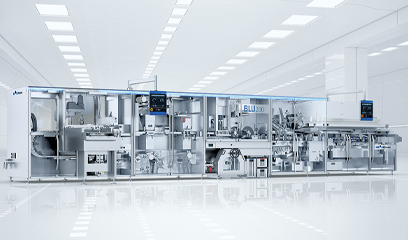
Werner Blersch: Yes, actually we did! Although we are best known for our blister machines for solid dose products, we also have a long and successful history of building packaging systems for ampoules, vials and syringes. In the past, though, we first developed the machines for solid dose products and adapted them later to liquid dose products, called parenterals. Today, we have dedicated packaging solutions for parenterals. The first machine we designed specifically for this product group was the BLU 400. But as we still needed a more compact and flexible machine in the mid-performance range, we introduced the BLU 200 in 2019. When I walk through our assembly hall now, I see more parenteral machines than ever before.
pactuell: With the C 200, Uhlmann has launched a cartoner specifically for parenterals. Why?
Werner Blersch: For parenteral packaging we need a cartoner with a bigger format range to have more flexibility to create an appropriate packaging design. Aside from the shift toward parenterals, we are also seeing another trend: The pharmaceutical industry is also looking for more sustainable packaging for its products, and carton packaging is considered to be just that. That’s why we offer to package parenterals in blisters or directly in cartons. And the C 200 is the ideal cartoner for the job.
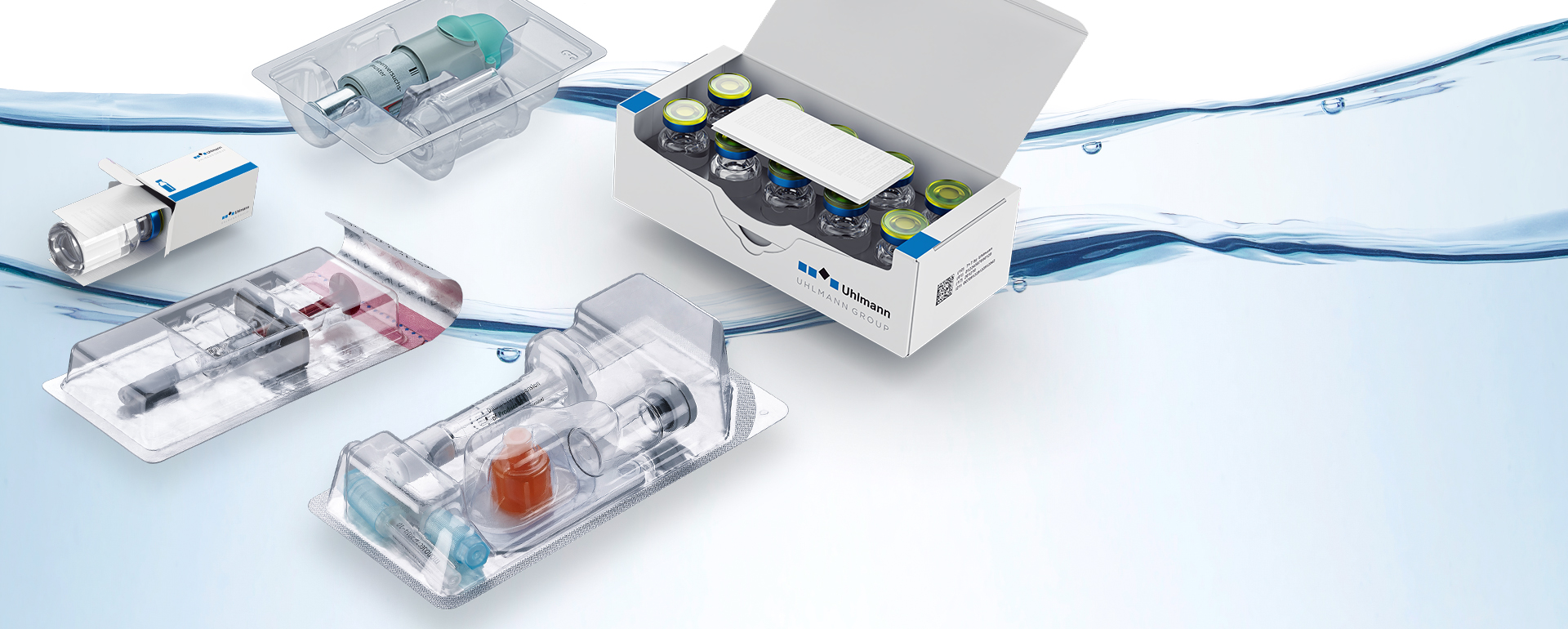
Parenteral products have to be handled much more gently than solid dose products.
Werner Blersch, Global Product Manager
pactuell: So what distinguishes machines for parenterals from blister machines for tablets?
Werner Blersch: Whether you are feeding, rejecting, reloading or transferring products to downstream processes, parenteral products have to be handled much more gently than solid dose products. The former are often very expensive and extremely fragile. So it’s vital to prevent product damage and associate product loss and cleaning costs. The blisters for vials, for instance, are designed differently: they are a lot higher and made of different materials than those used for packaging tablets. This is because the high barrier protection provided by PVC or aluminum foil is not required, say, for vials because they themselves act as the barrier. Here I can easily use PET, but it’s thicker because of the high drawing depth. The sealing is also different for parenterals. You can also use paper to produce the lid for these products. Or you can use vapor-permeable Tyvek if the parenteral blister is intended for use in the operating theater and has to be sterilized.
pactuell: Sounds like there’s a lot to think about when designing parenteral packaging machines…..
Werner Blersch: When you build a machine for parenterals, there’s always something special you need to consider. Some customers have syringes with needle protection, while others have syringes with a large finger flange, and still others require needles in an separate blister pack. On top of that, they all use different upstream machinery. The diversity in parenteral machines is immense. In addition, Track & Trace is more complicated, for example with medical devices: For instance, if you have a vial, a syringe and a needle in a blister, the vial must be provided with a code and tracked. And for vaccines, in particular, you also need to track the cold chain to ensure its integrity. There’s a lot to consider in this respect. But these special factors are all part of the job and what make it so enjoyable. After all, we are innovators – and taking the easiest route is simply not the way to stay ahead!
pactuell: What does this development mean for Uhlmann? Does it mean we’ll be focusing on parenteral machines and cartoners from now on?
Werner Blersch: Solid dose applications will always be important, purely because most people are reluctant to inject themselves. But we will certainly become more active in the parenteral sector, because the market growth, here, is simply bigger. And blisters will still play a role in packaging because they have some properties that a carton cannot fulfill. But the percentage of cartoners used for packaging parenterals will increase.
About
Werner Blersch has been working for Uhlmann as Global Product Manager since 2013, and is the company contact for parenterals. He therefore always has various syringes, vials and blisters close at hand. And when he’s not busy working on secondary packaging for parenterals, the 51-year-old is happiest spending time with his family and pursuing his hobbies of music and mountain sports.

Werner Blersch loves the mountains in winter.
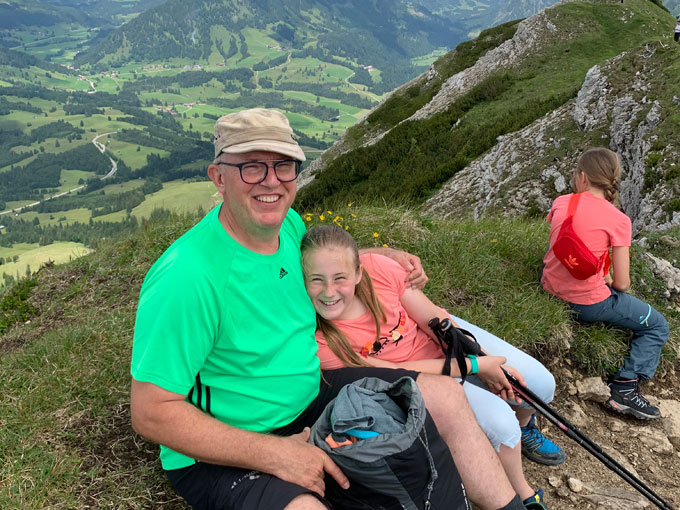
He likes to go hiking with his family.

Music is also one of his favorite pastimes.