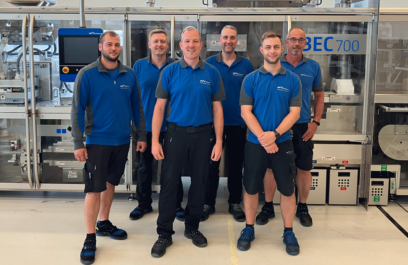
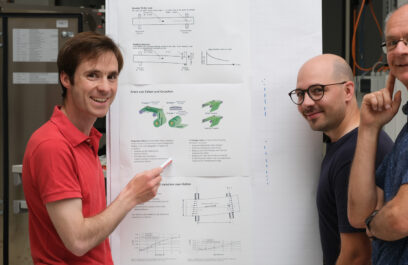
If you ask Christian Molt what is important to him in his daily work, you’ll get a straight answer, namely “teamwork”. And he and his team demonstrate just how effective good teamwork can be. He first started work at Uhlmann in February 2024 as Head of Production, and since April 2025 he has also been serving as Head of Operations, responsible for control, production planning, maintenance, service, and quality. His verdict after almost two years with the company is “Very positive”: “We have some great people working here who are driving the company forward. You can also tell that Uhlmann is a family business, because people look out for each other, are incredibly value-oriented, and focused not only on sales growth, but also on durability and sustainability across generations.”
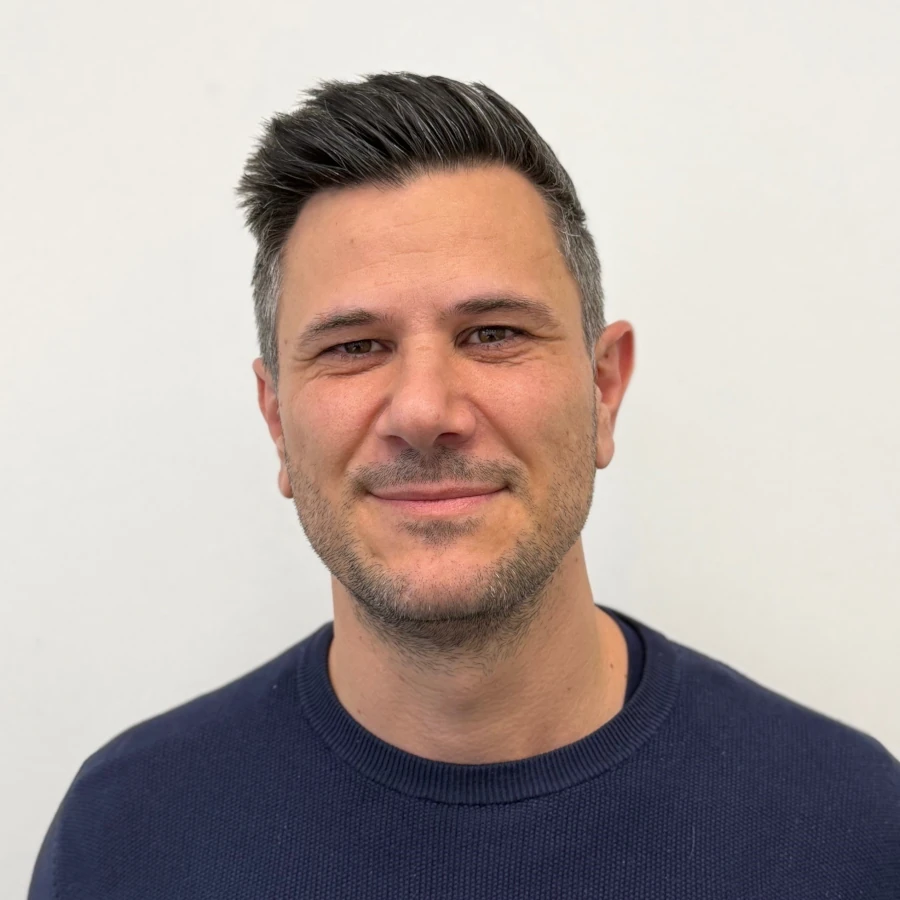
For me, value orientation and trust are very important factors. But I am also results-driven: we need to ensure that we achieve the goals we set ourselves.
Christian Molt, Head of Operations
Christian Molt is convinced that together we can achieve more. There is currently plenty of work to do for him and his 188 staff, and the team is particularly focused on productivity: “Capacity utilization is fluctuating wildly, and inflation is making many things more expensive for Uhlmann. So it’s vital that we keep costs under control while still staying customer-focused.” For the 44-year-old, automation is a key enabler in achieving this goal. The aim is to utilize production capacities in unmanned shifts on Saturdays and Sundays as well.
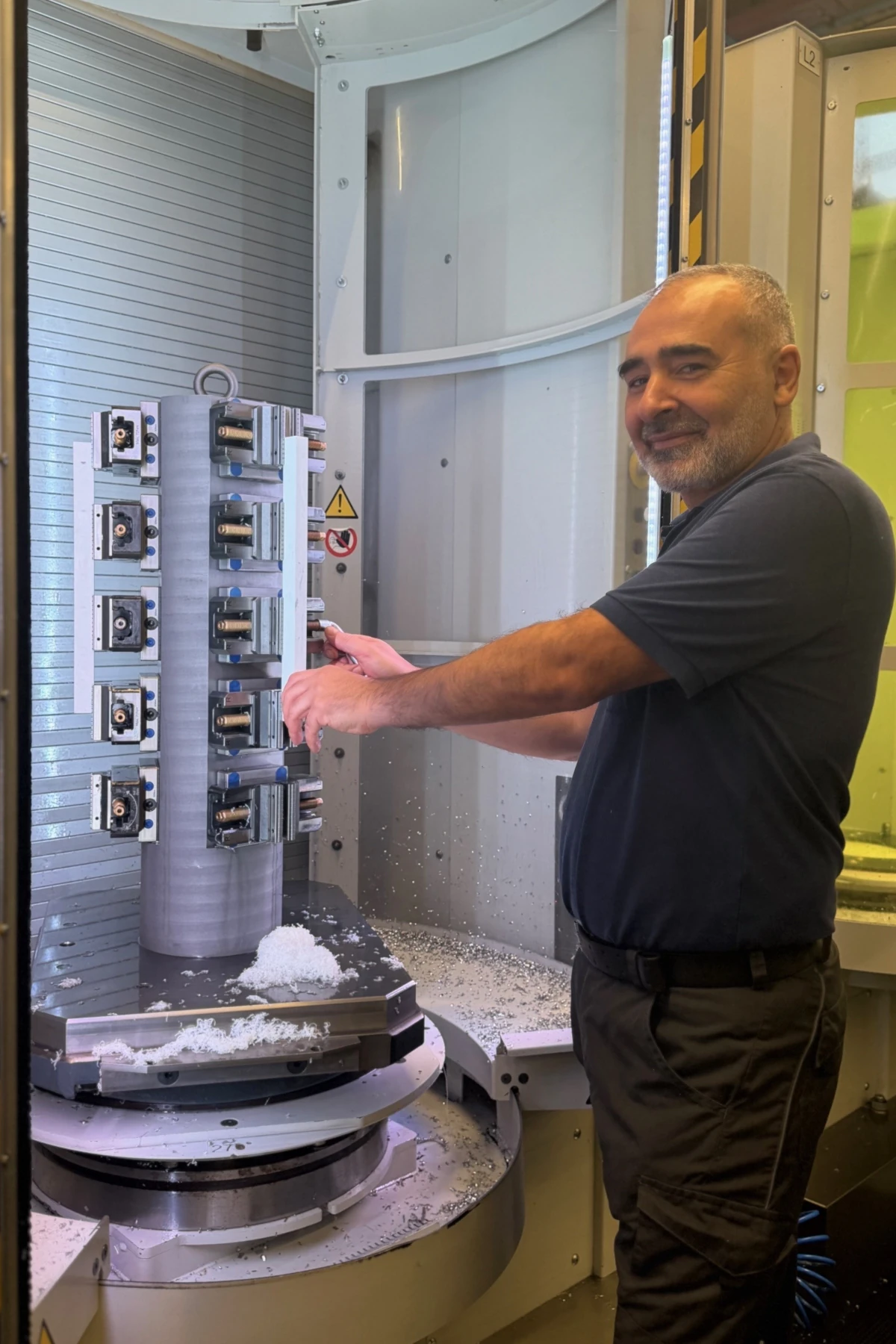


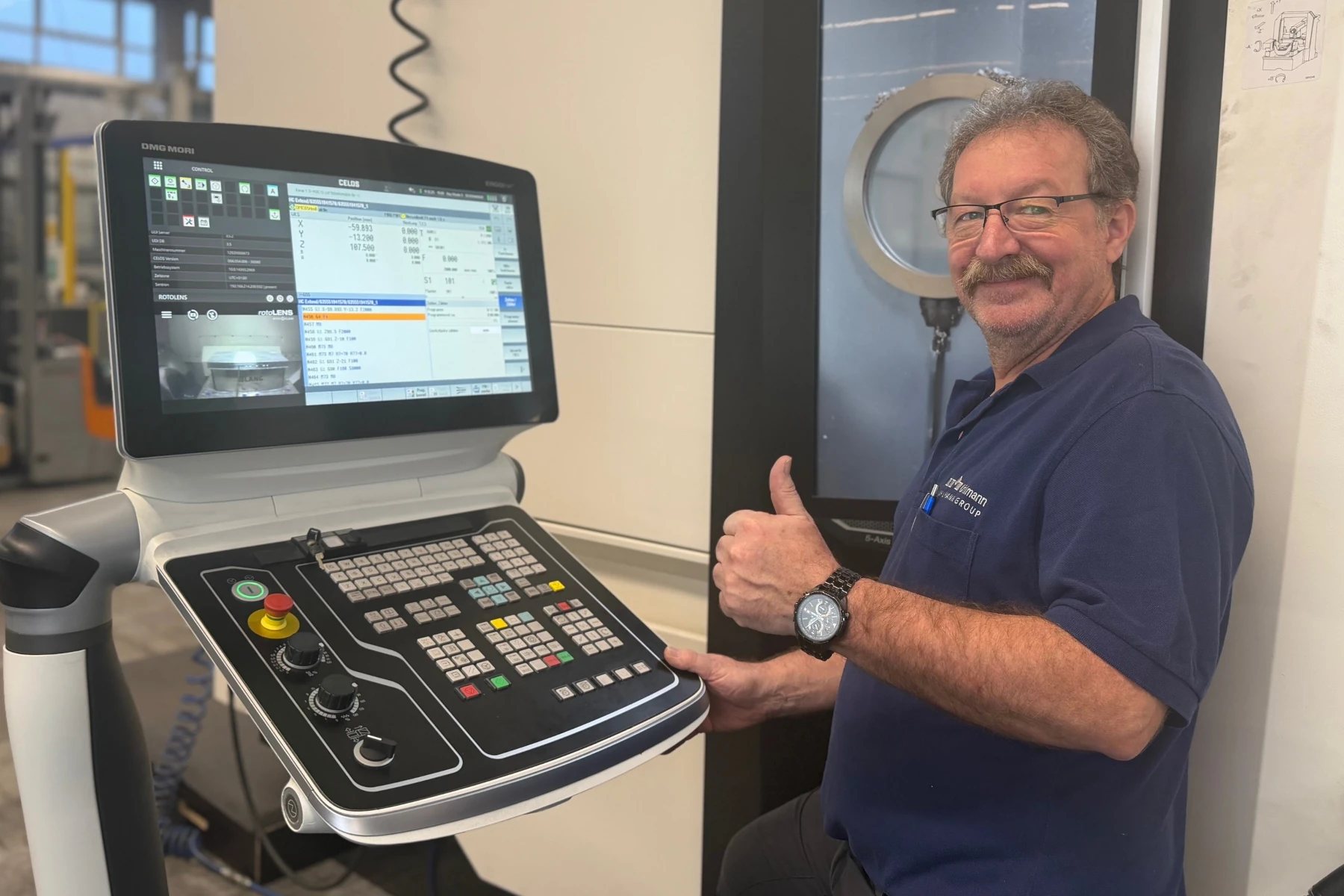
Milling processes around the clock
A new pallet handling system will make this possible in the future. It serves as storage for the connected milling machines, stores pre-loaded pallets, and makes them available to the systems. These then process the parts automatically. Christian Molt explains: “Three systems are already automated at our facility, and we can link four new machines to the pallet system.” Preparations are underway to ensure that everything is ready by the time the system is delivered in August 2026.
In their search for optimization opportunities, Molt and his team are also taking a close look at other areas. The new assembly cell in pre-assembly is a good example: “Until now, colleagues have spent a lot of time searching for the parts they need before they can start pre-assembly. The cell means they have all the essential components at their fingertips. This makes their work easier and reduces setup times,” explains Christian Molt.
We need to act with foresight. Our wealth of experience helps us adapt to the new global reality, keeping the things that work well and changing the things that don’t.
Christian Molt, Head of Operations
Christian Molt sees the initial skepticism of some as an opportunity to manage the transition smoothly. “I talk to people a lot and I’m happy when employees approach me with their concerns. Uhlmann is ‘strong, open-minded, and reliable’. These are the values we truly live up to here.”
Many building blocks, one goal
All measures contribute to our GO FOR 30 corporate strategy. The team is also synchronizing the existing strategy of the Operations division with GO FOR 30 to ensure that everyone is working toward the same goal. Christian Molt says, “Ultimately, we are part of the bigger picture and need to demonstrate how we are contributing to achieving the goals of the corporate strategy.” That’s why his team develops concepts and defines courses of action and measures for each individual functional area.
 Karl Braig
Responsible for Production Maintenance, Quality, Strategic Projects and Logistics in the UCO Division, joined Uhlmann 32 years ago
What issues are you focusing on at present?
Our current focus is on automation. Together with my colleagues, I’m redesigning the production process for the installation of the new pallet handling system, which entails various relocations and optimizations. We’re also collaborating with the holding company on the “Factory X” project. To this end, we are implementing measuring systems on the machines to make energy consumption transparent and identify potential savings. At the same time, we are running a project on the use of AI: In the future, the machines should be able to answer queries in the event of a malfunction. This will enable maintenance personnel and employees to respond more swiftly.
What opportunities and challenges do you see here?
The biggest challenge we face is having to implement the whole thing during ongoing operations – it’s like performing open-heart surgery. Day-to-day business continues while we set up the automation and harmonize software, machines, and systems – while keeping production downtime as low as possible.
As far as opportunities are concerned, in the future we will be less dependent on personnel working weekend shifts and will be able to manufacture 24/7. This will make us more independent and future-proof as a company.
What do you particularly like about your job and what is important to you?
I think it’s important that we are open and honest with each other– and that we can also address critical issues. That works very well in our team. I also like the fact that my work is so varied; you never know in the morning what the day will bring.
What do you value most about your team?
I like the fact that we have a great mix of people, both in terms of age and personality. Everyone has their own area of expertise, but we can still talk shop and discuss things together. It’s great fun and highly motivating.
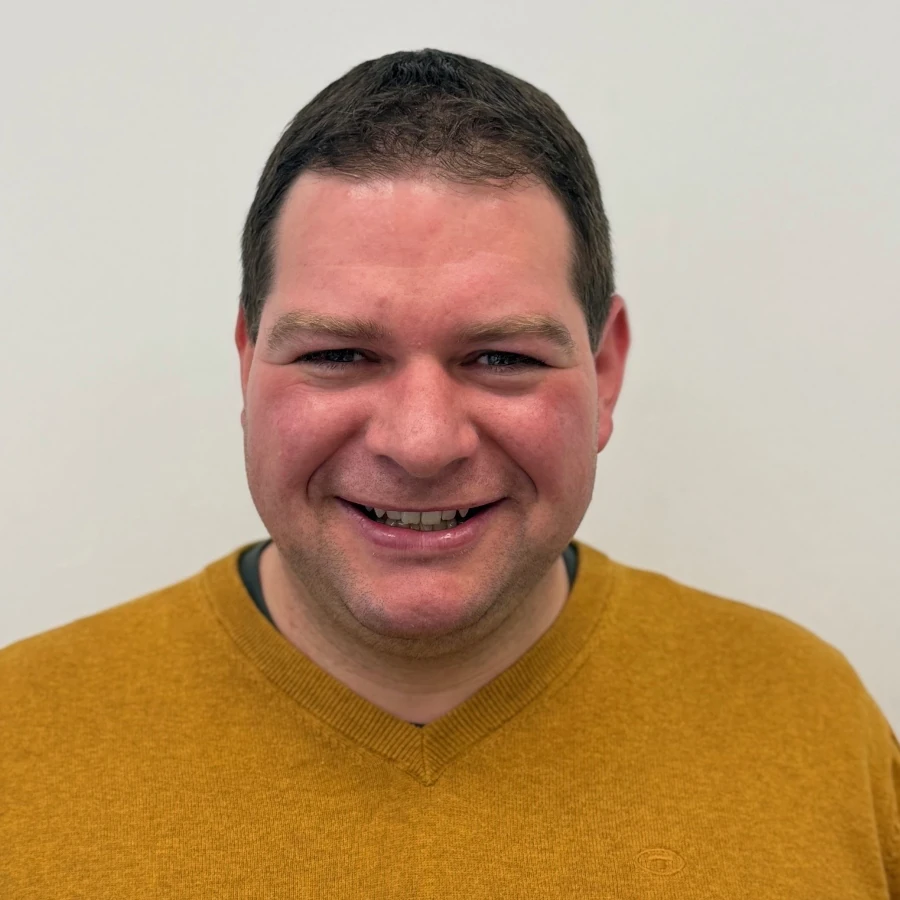 Michael Fuger
Production Planning, responsible for Routing Creation and NC Programming, joined Uhlmann 17 years ago
What issues are you focusing on at present?
Automation is also a big issue for my team and me. We are currently examining which parts we can still transfer to the automated systems. Programming entails setting up the NC programs accordingly, because we have to ensure that the right parts are fed into the machine and that a fully automated program sequence is guaranteed. Another issue is general process optimization. In other words, we need to ask ourselves how we can manufacture our parts even more cost-effectively while ensuring higher process reliability and thus also quality.
What opportunities and challenges do you see here?
The challenge lies in the fact that much of this is new, and you first need to familiarize yourself with everything, run tests, and try out new processes. And, on top of that, all of this is happening alongside our day-to-day business.
As far as opportunities go, it means we can use the software and systems to enhance our expertise and incorporate new technologies into our work. This helps us become better and more efficient.
What do you particularly like about your job and what is important to you?
I like the variety my job brings. We often have to find solutions at short notice, and engaging with the team is something I particularly enjoy.
Teamwork is important to me, whether it’s with my own staff or colleagues from other departments. When we communicate and interact with each other it’s important we do so in a spirit of mutual respect so that we can collectively find the best solution for our company.
What do you value most about your team?
Firstly, there’s the team’s professional expertise – everyone knows exactly what they’re doing and how it works. And secondly, we can all rely on each other, especially when there are issues to discuss or problems that need resolving. That makes working together very enjoyable.
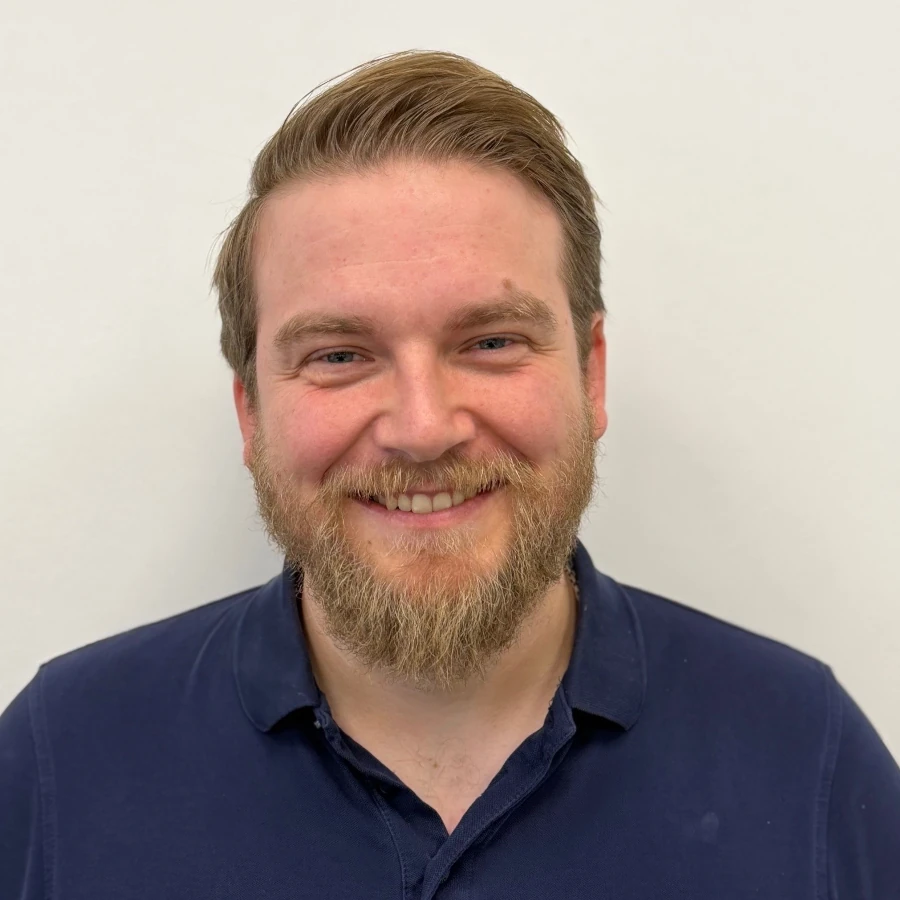 Andreas Hohneker
Team Leader Production Control, joined Uhlmann in 2016
What issues are you focusing on at present?
Our key issues are delivery times and meeting deadlines in production – in other words, ensuring that we can get the right parts to the assembly line at the right time. Another issue is inventory in production: we have to keep a constant eye on capacity utilization so that we can optimize throughput times.
What opportunities and challenges do you see here?
The biggest change will come from increasing automation. In the future, we will have to plan the sequence – and manage inventories – differently. Especially when automated systems also run on weekends, it’s crucial to provide the right parts and plan the workload accordingly. This is a challenge because it changes the way we work and requires us to establish new processes. It also takes time for the team to rethink its approach.
I see this as an opportunity for us to grow closer together with the assembly department. And we learn to understand each other’s key issues and develop solutions together. This promotes mutual understanding while also improving our processes as a whole.
What do you particularly like about your job and what is important to you?
I like the fact that we are involved in the entire parts manufacturing process: we see how the parts arrive and how they are processed here. This entails working closely with the assembly team.
For me, it’s important that we are open and honest with each other, and that you can voice criticism without fear of negative consequences.
What do you value most about your team?
We work well together as a team, and everyone can discuss things openly. This open communication was one of the reasons why I stayed on after my internship semester. Mutual trust among colleagues is high, and you can tell that everyone is working toward the same goal.
Christian Molt and his team also play a key role in the Next Step program. It’s essential to have close collaboration between our different divisions so that we can implement our integral solutions concept more effectively and offer customers added value from machines, software, and services. “Identifying areas for improvement is a shared responsibility,” stresses Molt. He is convinced that cooperation must change so that everyone can contribute. “There can be no more silos in the future. We need to incorporate different perspectives without losing speed – that’s the challenge.”
And the conditions for this are good, says Christian Molt. “I’m convinced that we can really make a difference with our team; and –as the Swabians would say – we’re a really good bunch. Everyone here is pulling in the same direction, and I am incredibly proud of this team’s effort.”
 Roman Schönberger
Team Leader Logistics, Tool Presetting and Raw Materials Warehouse, joined Uhlmann 5 years ago
What issues are you focusing on at present?
The main issue for me right now is reducing costs; our aim is to become more efficient. In the raw materials warehouse, we are currently in the process of standardizing materials and removing redundant stock.
Another major topic is automation: increasing equipment utilization rates are also changing processes in my area, for example, when it comes to the question of when materials and tools need to be at the machine.
What opportunities and challenges do you see here?
Die Herausforderung liegt darin, viele neue Themen und Prozesse umzusetzen und dabei die Mitarbeitenden optimal mitzunehmen.
The challenge lies in implementing many new topics and processes while optimally engaging employees.It’s about promoting understanding for the changes and the reasons behind them – in other words, why we are changing things and how they fit into the corporate strategy.
I see considerable potential for boosting our efficiency and resilience, both in terms of external and internal influences. By systematically training our employees, we will remain agile – despite the shortage of skilled workers – and secure our future.
What do you particularly like about your job and what is important to you?
I particularly like the fact that we are given ample opportunity to make our own decisions, and I enjoy seeing how the processes we manage lead to sustainably positive results. Working together with my colleagues is very important to me.
Our goal is to create added value together–not just for our own departments, but for the entire company. Securing visible results and continuous improvement are just as important to me as job satisfaction.
What do you value most about your team?
I value our positive, open cooperation. We have grown closer as a team through previous changes and know that we can achieve great things together.
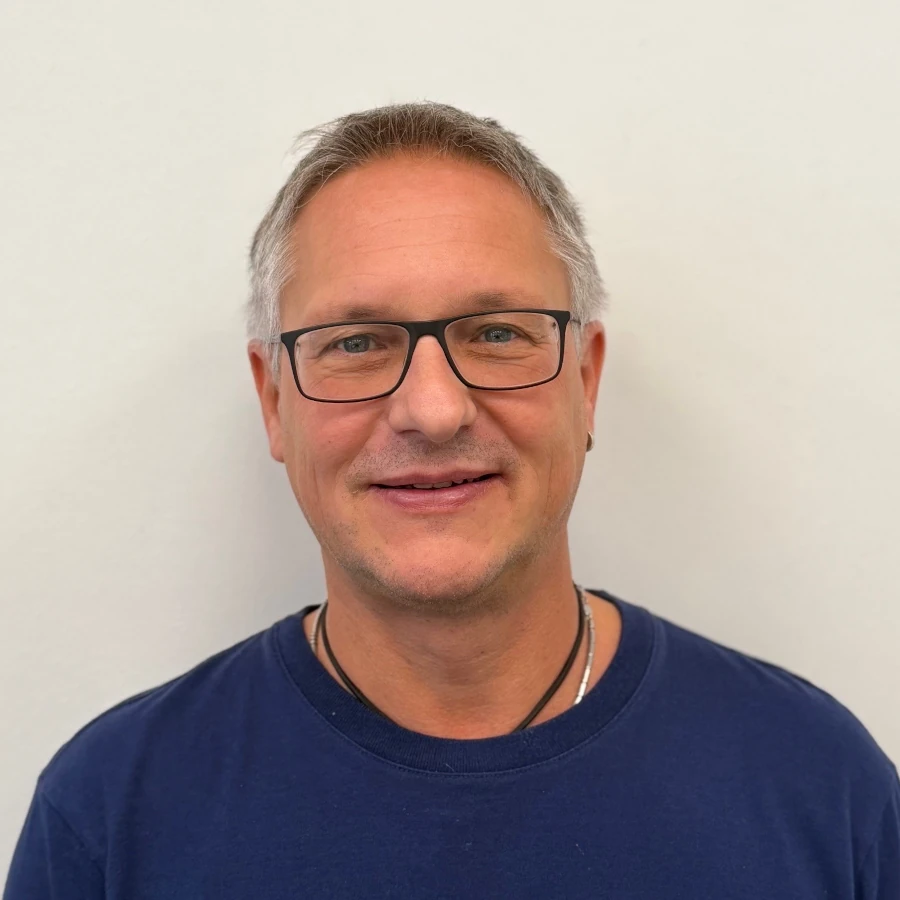 Thomas Schultheis
Group Leader Production, joined Uhlmann in 1995
What issues are you focusing on at present?
Together with Stefan Kullen, I supervise some 60 staff working in three shifts.
Our focus is also on increasing productivity and cutting costs. That’s why it’s crucial that we make efficient use of the machines and maintain stable utilization rates. It’s also important to deploy and train staff in such a way that everything runs smoothly despite downtime or malfunctions.
What opportunities and challenges do you see here?
A major challenge is getting employees to embrace change and explaining to them why we are taking certain measures. Only those who understand the reasons for the measures will really pitch in.
Our advantage is that although we now have fewer machines and fewer employees than before, we are much more productive – which shows that our efforts are worthwhile.
What do you particularly like about your job and what is important to you?
Every day is different, so it’s always exciting. Daily conversations with employees, dealing with different personalities, and solving problems together make the work varied and fulfilling.
What do you value most about your team?
I think it’s great how well we work together – especially since we’ve grown closer as a result of previous restructuring. We complement each other well, communicate openly, and make decisions independently. That makes our work both rewarding and inspiring.
 Stefan Kullen
Group Leader Production, joined Uhlmann 5 years ago
What issues are you focusing on at present?
I work the opposite shift to Thomas Schultheis. Our job is to ensure that theory – i.e., programming and planning – translates into practice. Every day, we have to respond to unplanned situations, whether it’s absent employees, machine malfunctions, or missing materials. That makes the job exciting and constantly challenging for us.
What opportunities and challenges do you see here?
The biggest challenge is to make all processes so stable that they continue to work even in the event of a malfunction. The upcoming automation will enable us to take the next step forward and further boost productivity.
What do you particularly like about your job?
That would be the daily variety. Every day is different – that’s what makes it so appealing. You are constantly interacting with your colleagues, solving problems together, and seeing the direct impact of your work.
What do you value most about your team?
We work incredibly well together. We consult closely with each other, especially during shift handovers, to ensure that no information is lost. Open communication is highly important to us.
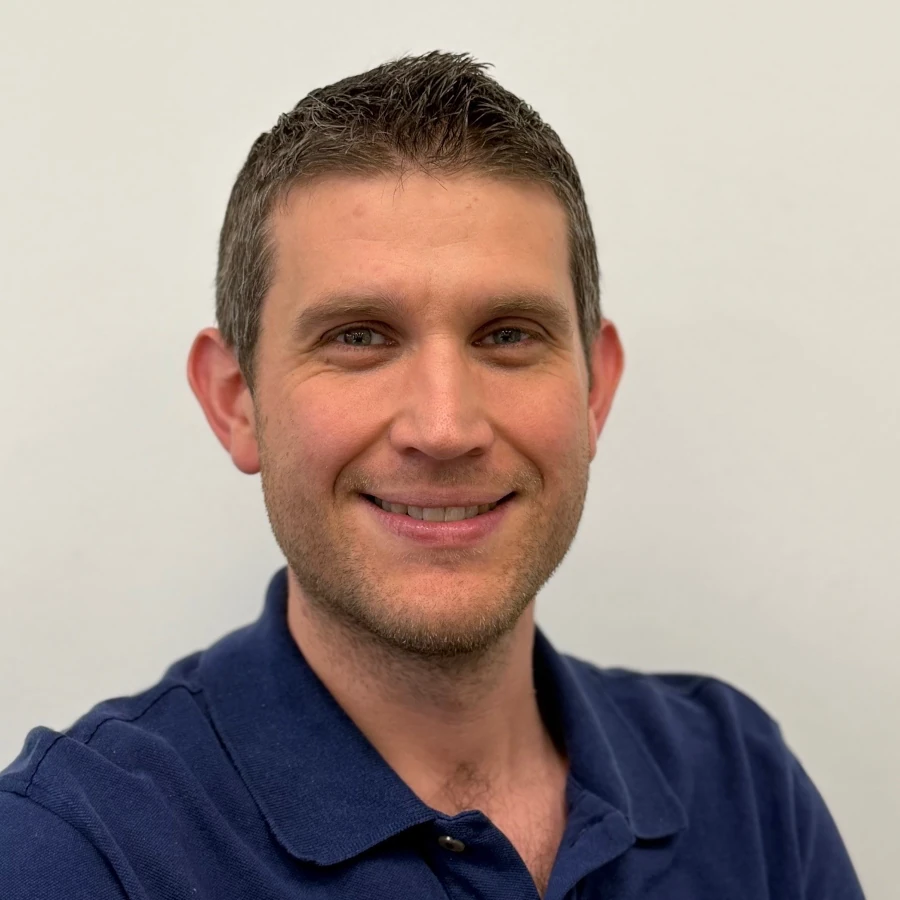 Johannes Steck
Head of Sheet Metal Fabrication, Fast Shot, Metalworking and Format Assembly (Plant 1), joined Uhlmann 7 years ago
What issues are you focusing on at present?
I am currently working on setting up pre-assembly in Plant 5, designing the tool shop, and continuously optimizing format assembly. The objective is to increase the provision of fully assembled components in format assembly so as to reduce throughput time and quickly detect any faults. This requires close coordination with the control station, project management, and internal and external customers.
What opportunities and challenges do you see here?
The biggest challenge lies in the myriad interfaces involved. It’s important that we have everyone involved on board and keep track of everything. Given all the changes underway at present, it’s vital that we don’t leave our most valuable asset – our employees – behind. Changes require effective support –this is a central management task.
Ultimately, by making our company more profitable and efficient, we all stand to benefit. Learning and growing together is a great opportunity in this respect.
What do you particularly like about your job and what is important to you?
I am involved in the entire value creation process – from individual parts to the finished format set. No two days are the same; you constantly need to respond flexibly, make decisions, and find solutions together. I particularly enjoy this diversity and working closely with people.
For me, it’s important that we can talk openly about everything – even critical issues. We support each other, provide feedback, and help each other when someone is facing a difficult situation. This trust is the foundation of our work.
What do you value most about your team?
What I value is our open communication and close cooperation. We have a strong management team where everyone knows what everyone else is doing – we speak with one voice and we all pull together.