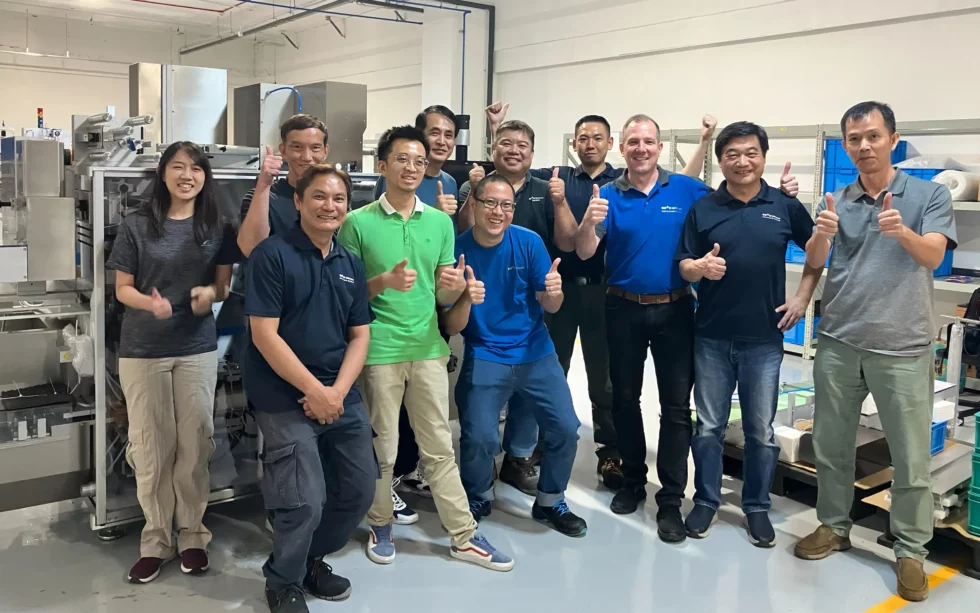
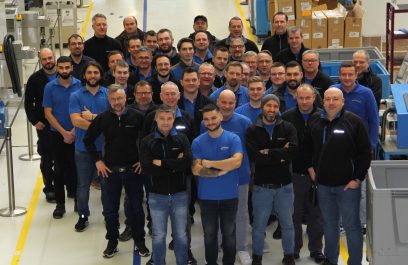
“For me, final assembly is the most exciting job at Uhlmann,” says Stefan Kehrle, and you can feel his enthusiasm is real. Kehrle is an old hand when it comes to commissioning the machines. He joined Uhlmann in 1996 as a milling cutter and has been working in the Synchro department since 1997 – initially as a final assembler and now as a group leader.

For me, final assembly is the most exciting job at Uhlmann
Stefan Kehrle, group leader final assembly
The 66-strong Synchro team is made up of both – young talents and experienced colleagues. The final assemblers not only commission the Uhlmann machines here in Laupheim, they also accompany them on their way to the customer and prepare them for the final acceptance test and production on site worldwide. A willingness to travel is therefore one of the basic requirements for this job.
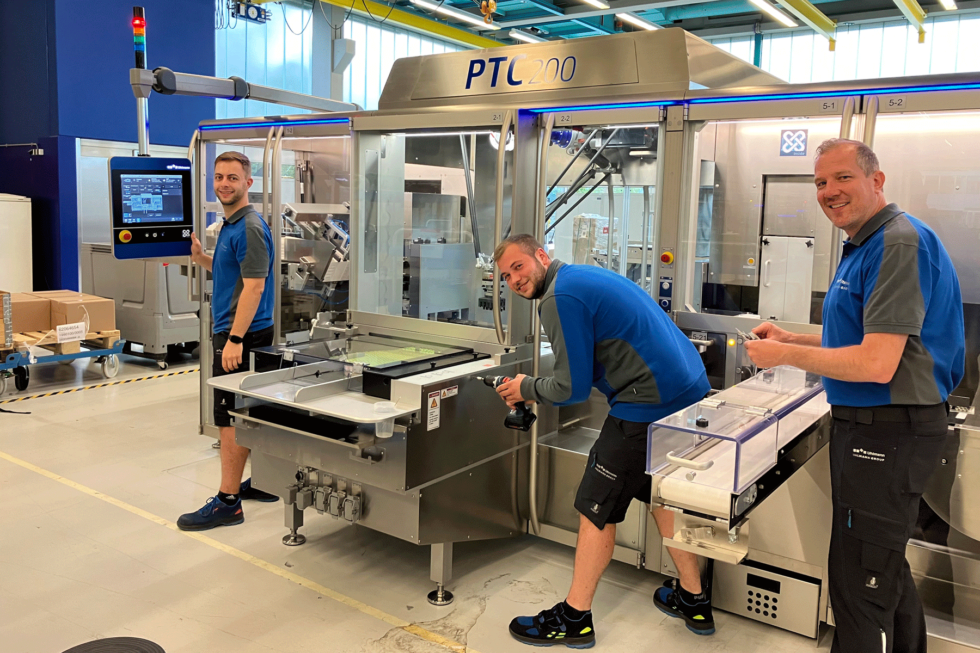
Bringing the machine to life
Stefan Kehrle has travelled a lot. He says: “I have fond memories of the time when I was still bringing the machines to life myself as an assembler. For me, the absolute highlight was always when recyclable bottles, blister packs or folding cartons came out at the end. That makes you feel proud!” Even as a manager, he still goes on assembly trips from time to time. “That’s important to me so that I don’t lose touch with my colleagues’ work and the challenges they are facing.”
Click through the milestones of our machines on their way to the customer:
1.
Mechanical Acceptance Test (MAT)
The new machine is pre-assembled and electrically commissioned in Hall B in Laupheim. Once everything is ready, the MAT takes place
Mechanical Acceptance Test (MAT)
The empty machine runs through various tests, such as a ten-hour overnight run. The MAT varies depending on the machine.
At the end, the machine must function flawlessly. It then moves on to the Synchro department in Hall C.
2.
Factory Acceptance Test (FAT)
This is where the final fitters start synchronizing the machine. They assemble all the machine components and link them together electrically.
Factory Acceptance Test (FAT)
Most often several formats for different products are run on the machines: for blisters, bottles or cartons. Each molded component is run in and the entire line is subjected to a test run. Finally, there is the FAT, i.e. the factory acceptance test by the customer.
Once the necessary rework has been completed, dismantling begins, and the machine is shipped to its destination country by truck, air or sea freight.
3.
Site Acceptance Test (SAT)
On arrival, the customer unpacks the machine and places it in the production facility.
Site Acceptance Test (SAT)
The Uhlmann fitters arrive, align / level the machine and synchronize it with the equipment provided by the customer.
Test runs and functional checks follow.
Finally, there is the SAT which is the final acceptance of the machine by the customer.
Monotonous? Not here!
Juri Rosin initially worked as a final assembler for the bottle fillers as well. He startet in 2014. Today, Juri and his team are responsible for the intermittent cartoning machines and the USP serialization platform. He says: “This job involves many different tasks. It’s never monotonous. That makes it exciting and you always learn something new.” When asked what skills a prospective final assembler should have in addition to a desire to travel, he replies: “Extensive technical knowledge and electrical engineering skills. Industrial mechanics, electricians and mechatronics engineers are therefore perfect for the Synchro department.”

This job involves many different tasks. It’s never monotonous. That makes it exciting and you always learn something new.
Juri Rosin, group leader final assembly
A must have: talent for improvisation
In addition to technical skills, Stefan Kehrle also values the human element: “A final fitter should enjoy working with people. We work with a wide variety of contacts from many different cultures. It is very important to be curious about new things and open to the unexpected. If you’re afraid of that, you’re in the wrong place.” Because quite often it means improvising.
Juri Rosin can confirm this: “The interfaces are actually clear, but sometimes it turns out that it does not fit as planned at the customer’s site. Then you start adapting all the interfaces with a file and angle grinder.” In recent years, the machines have also become more complex due to digitalization and functions such as track-and-trace. “Commissioning used to be completed in one to two weeks. Today it takes – depending on the scope of supply – from 1 to sometimes even 14 weeks,” he says.
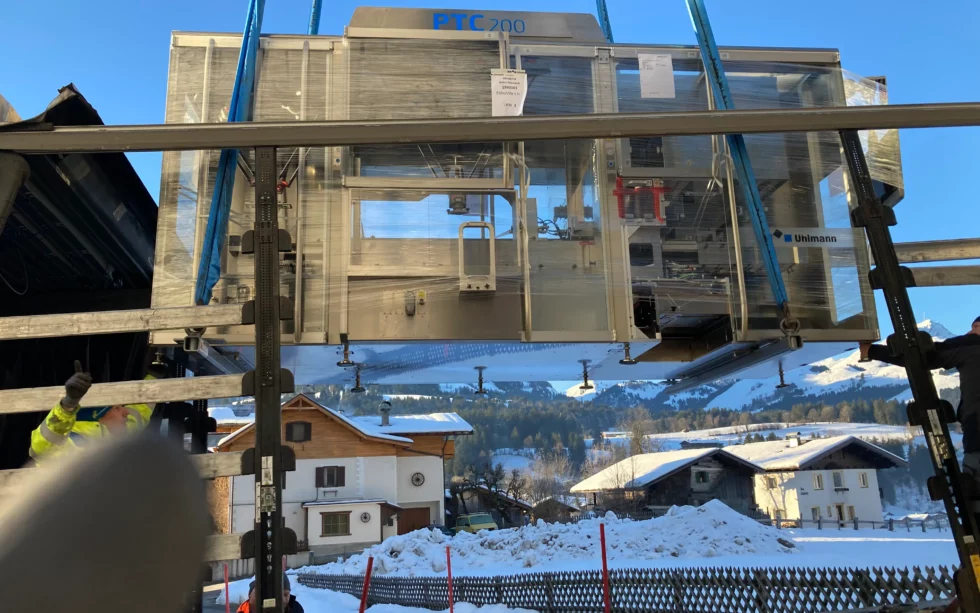
Icy temperatures in Austria …

… but a fantastic mountain view when transporting this machine to a customer’s production facility.
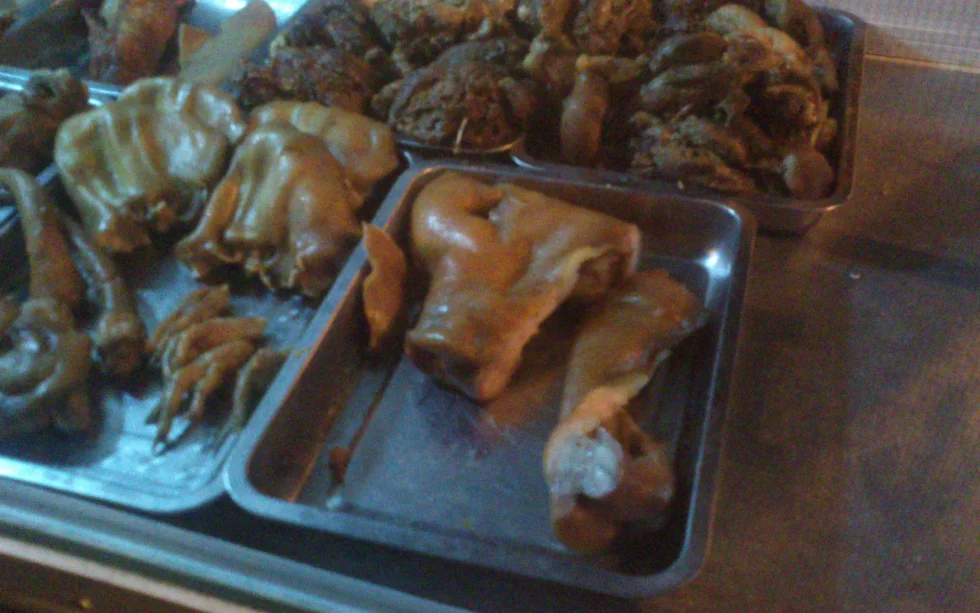
Chinese specialties.

Tipped over: This machine landed on its side at a trade fair in China.
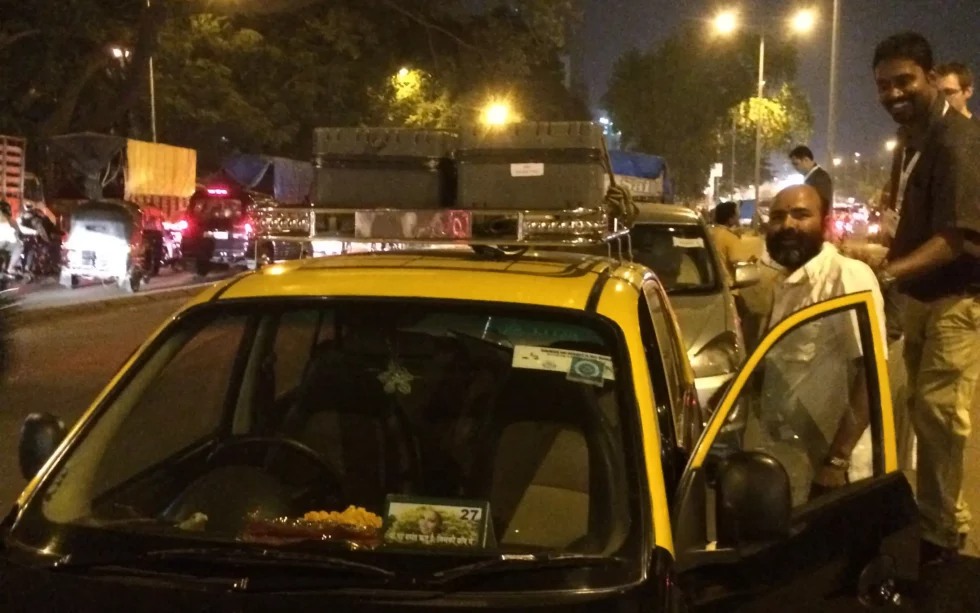
Pragmatic solutions in India: the toolbox rides on the roof of the cab.
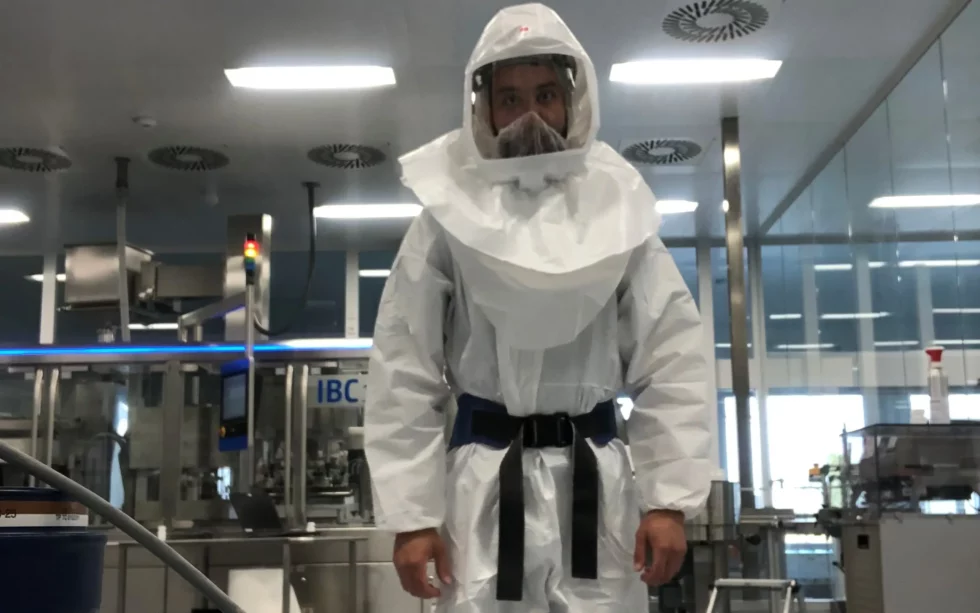
A full protective suit is mandatory when assembling in a cleanroom. You can work up quite a sweat.

The view from a window in Algeria.
The two group leaders agree that the commitment is also worthwhile in the long term. “Final assembly is a great stepping stone, also for other tasks at Uhlmann,” emphasizes Kehrle. “Our colleagues know the machines inside out, they are people in great demand, whether in programming, validation or design.” And there are also opportunities for further development in the Synchro department. Juri Rosin and Stefan Kehrle are the best examples of this: they have used their springboard.
Here, our assembly technicians reveal what makes their job so special:
Jonas Weber, Assembly Technician since 2018
Jonas, how did you end up in the synchro department?
During my apprenticeship as a mechatronics engineer at Uhlmann, I was offered the opportunity to shorten it and work as a final fitter. I accepted straight away. I’m currently responsible for the bottle fillers and the PTC 200 tray machines. I think it’s great that the work is so varied, we work closely with other departments and are responsible for delivering the machine to the customer in good condition
You travel a lot, what do you like about it and what are the challenges?
The advantage is quite clear: I can travel to countries that I wouldn’t otherwise visit – China or Mexico, for example. I’m constantly getting to know new people and cultures, which is exciting. The disadvantage is that I have to put my hobbies and club activities on hold when I’m traveling. The time difference also makes it difficult to keep in touch with friends and family. It doesn’t bother me so much when I’m away for three weeks, but when I’m travelling for five weeks, it gets exhausting.
Are there any particular highlights that you remember?
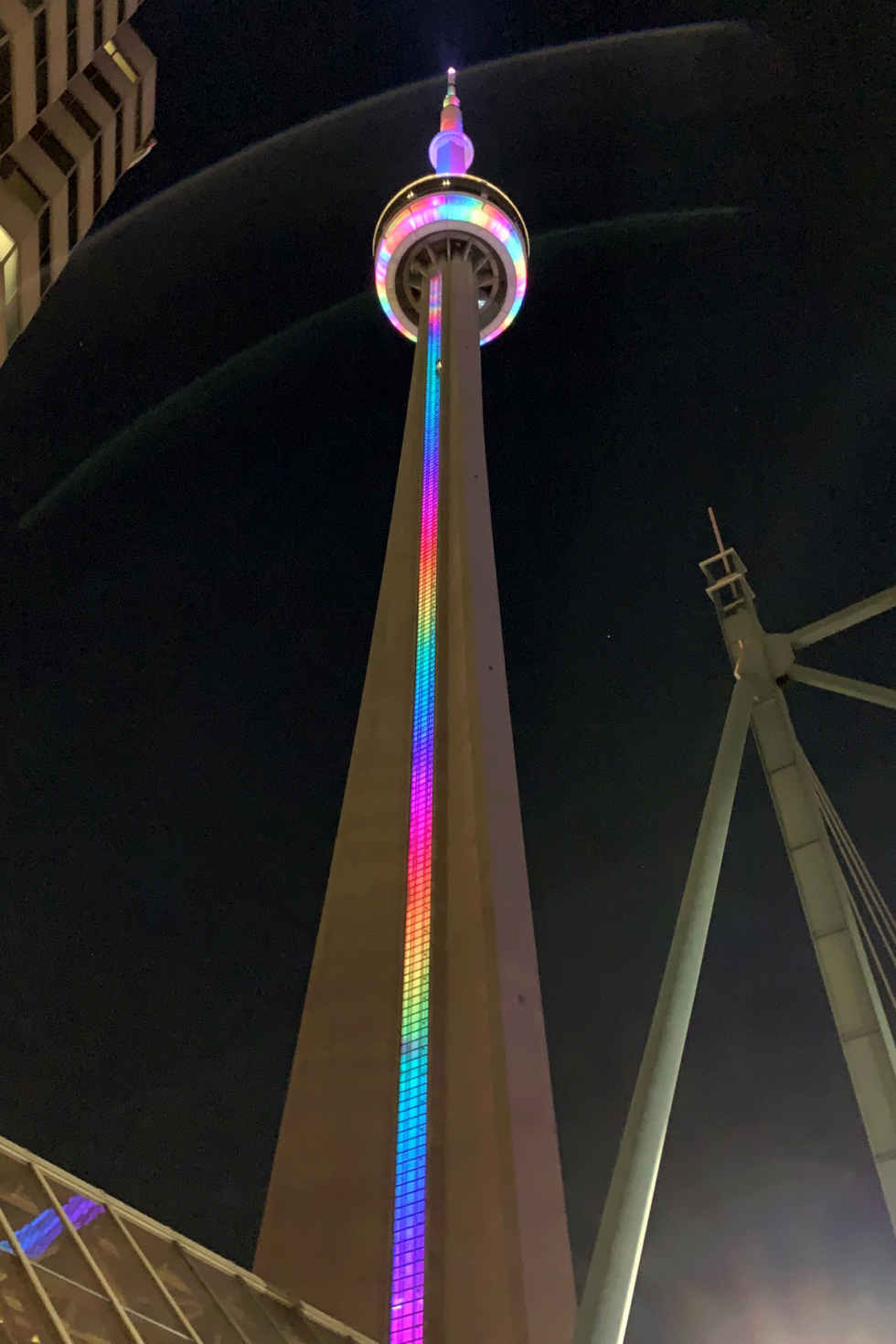
My first business trip. I was with Uhlmann USA and half an hour away from New York by bus. I used to take the bus to New York at the weekend and see the city. That was great. During the Corona pandemic, I was in Toronto and was able to move around the city freely, while everything was at a standstill here. But I also have fond memories of my trip to Mexico. Our customer’s machine operators were really nice and invited me to go out for street food with them in the evening. The problem was that they didn’t speak English and I didn’t speak Spanish. Until today I still don’t know what I ate. But it was delicious and the evening was great fun.
Dirk Westenberger, Senior Assembly Technician, Assembly Technician since 1998
Dirk, you have been working in final assembly for 26 years, what do you like about your work?

I find it interesting to work with people from different cultures and to make new friends. Of course, I also enjoy travelling. On average, I spend 120 to 150 days a year on the road. I like to spend longer in other places so that I can get to know the people and countries better. But sometimes I only see the hotel, customer and airport of a country. In Australia, for example, I had exactly one day off out of five weeks.
What skills do you think a final fitter should have?
You have to be very communicative, work independently, be able to organise yourself and be extremely flexible. I’ve also arrived and found myself standing in a building shell instead of a finished hall. You have to make the best of the situation. Language is also a key factor, English is a pre-requisite. And you shouldn’t mind being on the road alone for several weeks.
What has impressed you the most so far?
Of course, cities like Sao Paolo or Rio de Janeiro are exciting. But what impresses me again and again are the people in Bangladesh. Although they have so little themselves, they are incredibly warm and hospitable.
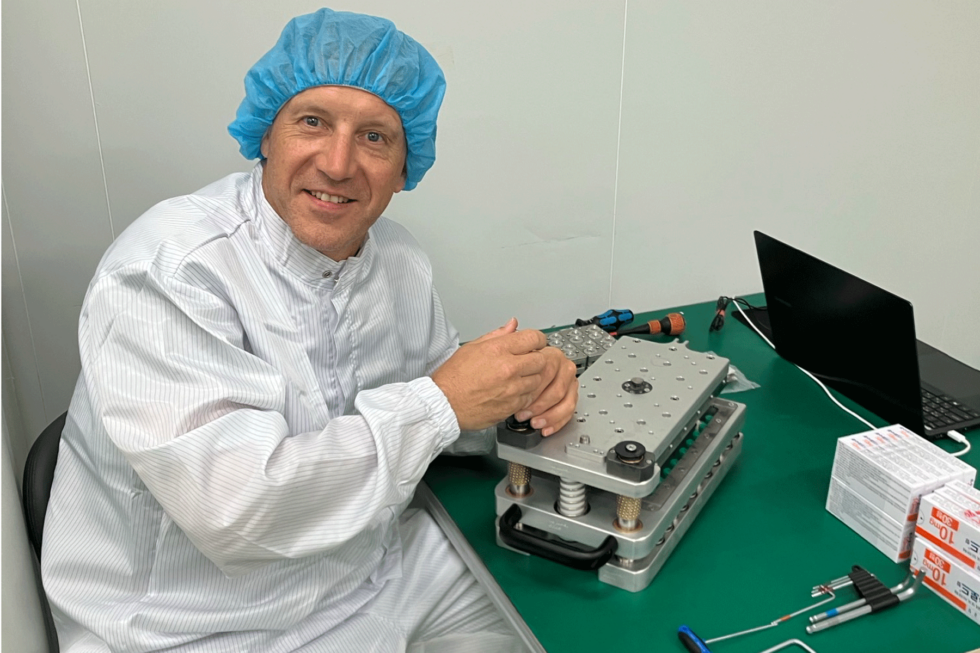
Daniel Bailer, Assembly Technician since 2020
Daniel, why did you decide to join the Synchro department after your apprenticeship?

I found the tasks in final assembly very exciting. There are always new things to do and challenges to overcome. Initially, I took care of the USP serialization systems, and recently I’ve been responsible for the PTC 200.
What do you particularly like about your work?
The variety! I always have to adapt to new customers and their specific requirements. That varies a lot in some cases. In one project, we spent 14 weeks with the customer with one of the first major USPs. Seeing the product run on the machine at high speed at the end was really cool. I find it exciting to keep running in new products on our machines. There’s never a dull moment. And of course, I also enjoy traveling.
Where have you been working so far?
Due to the machines, I was mainly on the road in Europe, for example in Denmark and France. However, my work on the cartoning machines will change that in the future. The next customer project could take me to the USA, which is one of the countries I would like to visit, along with China and Mexico.
Markus Przibille, Assembly Technician since 1996
Markus, what are your tasks in the Synchro department?

In the first few years as a final assembler, I looked after a lot of standard machines, but for the last ten years I’ve been exclusively responsible for special machines. These present even more special challenges, as they are usually large lines with many components from other manufacturers. You spend a long time on the road during commissioning. For one project, for example, I was in Spain twice for six months.
But recently you were on a completely different mission…
Exactly, I was training our team in Singapore. We have been building the B 1240 blister machine there for more than ten years. This machine is sold to customers all over the world therefore the process is different to the systems manufactured here. Commissioning takes place in Singapore. For the Asian market, the final assemblers from Singapore carry out commissioning at the customer’s site. For machines that are sold to Europe and Western countries, this is done by our colleagues here in Laupheim. The focus of my stay was on transferring knowledge to my colleagues in order to create uniform, efficient processes and to clarify any questions. That is our great advantage: we can pass on the knowledge we have gathered here over decades. And my colleagues now also have me as a direct point of contact.
How did you find working with your colleagues on site?
It was absolutely great! The hospitality, helpfulness and cooperation was a dream. We worked together as partners and I really enjoyed it. I was welcomed like a member of the family, which was really nice.