Hello Robert, hello Andreas! Great to have you with us. Let’s jump right in with the most important question: Who exactly is the UMF team?
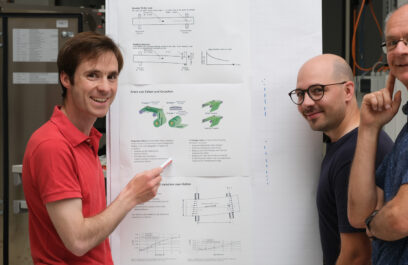
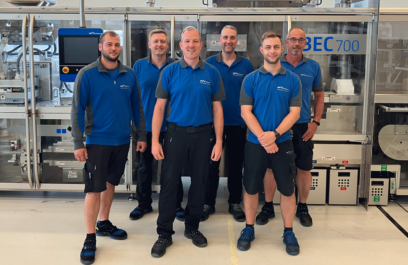
Robert Rettich: UMF is made up of two parts – an operational team and a strategic one. The operational side includes our Facility Managers, which consists of janitors and industrial electricians. They’re split into two groups led by Uwe Schelkle and Markus Enderle. Their work covers a wide range of everyday tasks, often behind the scenes, that keep our buildings running smoothly.
Then there’s the strategic team which I lead. We’re responsible for all renovation and construction projects at the site, for developing the location, and currently for implementing the legally required energy management system.
Altogether, there are thirteen of us in the UMF team. For larger construction projects, like the new corporate restaurant, we bring in external experts like architects, technical planners for building systems, structural engineers, energy consultants, and specialists in kitchen technology.
What are some of your typical tasks on the operational side?
Robert Rettich: It’s a wide range of responsibilities. By providing buildings, workspaces, and the necessary infrastructure, we ensure that employees have access to everything they encounter in their daily routines and need to carry out their work. That includes ensuring a stable energy supply so that all equipment works properly and the heating is reliable throughout the site.
We also take care of setting up meeting rooms for internal events, keeping workspaces clean every day, and making sure coffee machines and beverage dispensers are stocked and functioning. Many of these tasks happen outside regular working hours and are often carried out in coordination with external service providers.
Our goal is to offer our colleagues a more attractive dining experience throughout the entire day. With the new corporate restaurant, we want to create a wider range of options.
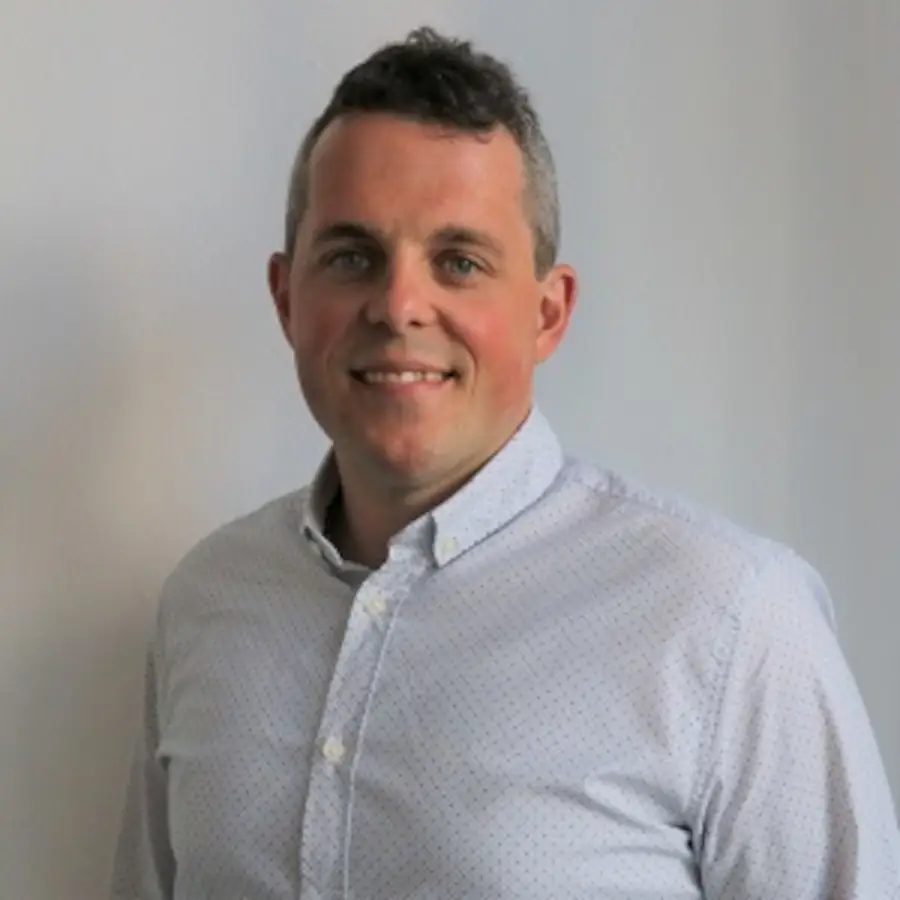
Robert Rettich, Head of Facility Management
So, in a way, you’re an essential part of employee satisfaction. Especially when the coffee machine isn’t working!
Robert Rettich: (laughs): Exactly. And when it snows, we make sure the paths are cleared so everyone can get into the building safely. We’re also involved in events. Every table setup and every food cart you see is connected to power and water by our team. Maintaining the green spaces around the site is also part of what we do.
Then we’d like to take this moment to say thank you for everything you do! Now let’s talk about the new canteen – or rather, the new corporate restaurant. Why build a new one, and what’s the goal?
Robert Rettich: Our goal is to offer our colleagues a more attractive dining experience throughout the entire day. Right now, we only have a snack break and lunch service, with nothing in between. But our working hours have changed. It’s no longer just the classic shifts from 6:00 to 15:00 or 17:00. Many people start later and work into the evening. With the new corporate restaurant, we want to offer more flexibility. One idea is an “All Day Counter” where you can get cereals, coffee, pastries, fruit salads, and similar items throughout the day. It’s also a place where you can meet for a coffee or a slice of cake. That adds to the feel-good atmosphere and makes the offer more diverse.
That sounds like a completely new experience!
Robert Rettich: It is. Our current cafeteria is definitely showing its age. The kitchen area is far too small, and the layout makes it difficult for our catering partner to work efficiently. At the moment, we use a “cook and chill” system. Main meals are pre-cooked at Gastromenü in Ulm, chilled, delivered to us, and then reheated in the cafeteria.
In the new corporate restaurant, we’ll keep the current menu structure – two standard meals plus a special – but the way the food is prepared and presented will change significantly. Instead of ‘cook and chill’, we’re switching to fresh cooking. That means dishes like stir-fried noodles or vegetables will be prepared on the spot and served immediately. This gives our catering partner much more flexibility in how they combine main dishes and sides.
Andreas Gantert: One of the highlights will be the ‘action counter’. Colleagues will be able to watch as, for example, pizza dough is rolled out, topped, and baked right in front of them. It’s a kind of open kitchen concept that adds a whole new atmosphere to the corporate restaurant.

That sounds fantastic! How is the construction progressing, and what does it mean for everyone here at the site?
Andreas Gantert: We’ve already completed several preparatory steps for the new building. It’s not just about creating a new restaurant; theproject also includes the renovation of Building A2 and a broader reorganization of our infrastructure.
One major milestone was the infrastructure project that preceded the construction and is now nearing completion. It tackled two key areas. First, we’re restructuring the site’s energy supply. Currently, the transformer station “D6 alt” isn’t connected to the one in Building B. That means we can only use the solar power generated on the parking deck in Buildings B and D6, but not across the rest of Site 1.
Robert Rettich: That’s why we’ve integrated a new transformer station into the corporate restaurant, which will replace “D6 alt.” This will allow us to distribute every kilowatt hour of electricity we produce across the entire site, cover our own energy needs, and increase our level of energy independence. It also opens the door to install additional solar panels on our rooftops.
The second part of the project involved rebuilding the entire IT network. The new infrastructure is not only more modern but also significantly more robust. It’s completely redundant, which means it offers much greater protection against outages.
So now the real construction work can begin?
Robert Rettich: Exactly. With these preparations in place, we’re ready to start the renovation. The demolition corporate is scheduled to arrive next week (calendar week 34), and visible demolition work will begin in week 37. After that, we’ll move straight into the structural construction phase.

However, a project of this scale definitely has some disruptions, right?
Robert Rettich: Definitely. As soon as the demolition excavator starts, we’ll notice the impact. There will be noise, dust, and temporary changes to walking routes and internal movement across the site. Unfortunately, that’s unavoidable. Our goal is to keep the inconvenience for everyone as minimal as possible.
Andreas Gantert: For example, the meeting rooms from Building A1 will be relocated to the Kekeisen building during the construction phase. The main logistics route between Buildings B and C1 will also be affected by construction traffic. To manage foot traffic, we’re reorganizing access to the buildings. There will be separate entrances for Buildings B and C, one for Building A, and another for the D buildings. We’ll also set up a central location where plans and updates will be posted, so everyone can stay informed. It’s a great way to keep communication around the project transparent and accessible.
Robert Rettich: That’s right. And with the construction of the new corporate restaurant, the current cafeteria will need to be dismantled. We’re committed to continuing to offer lunch service, but there may be a short period, maybe a week or two, when we’ll need to switch to packed snack bags.
So, what happens next, exactly?
Robert Rettich: The renovation will take place in two phases. First, the new corporate restaurant will be built. Once it’s up and running and the test phase is successfully completed, we’ll begin dismantling the old canteen. From that point on, a lunch service will be provided in the new corporate restaurant.
We’re not just building a modern kitchen; we’re also creating new spaces for people to spend time. The furniture will be varied, ranging from traditional tables to lounge chairs, so everyone can find a spot that suits them, whether they’re looking for a quiet break alone or a place to meet with others. The lighting will also change. Warm light will help create a relaxing atmosphere that invites people to unwind.

Example image of the new outdoor area.

Warm lighting creates a relaxed atmosphere.

The interior features high-quality furnishings.
Andreas Gantert: Another new feature is that the space previously used as the casino will no longer be separate. It will be integrated into the corporate restaurant, adding nearly a hundred extra seats. That gives us more flexibility, especially during peak times, and eliminates the need for reservations. Guests will be seated right alongside employees.
To wrap things up — what’s your personal highlight in this major project?
Robert Rettich: For me, it’s the fact that Site 1 is being clearly strengthened, especially from a sustainability perspective. With this new building, we’re making a conscious effort to work with the space and structures we already have. What we’re creating isn’t just meant to last ten years, it’s designed for the next thirty, forty, even fifty years. It’s built for future generations, both in terms of size and quality. For me, it’s a strong commitment to the Laupheim site.
Andreas Gantert: I’m excited for the project to finally start. You can really feel how much passion has gone into it. The new atmosphere we’re creating will be something special.
And what would you like to share with your colleagues as the project moves forward?
Andreas Gantert: A sense of anticipation for what’s to come!
Robert Rettich: And a bit of patience and understanding for the disruptions along the way. We’re doing our best to keep the impact as low as possible. In the end, we’ll have a corporate restaurant and renovated buildings that truly enhance the campus.
A big thank you to Robert, Andreas, and the entire UMF team! There’s a lot to look forward to. And to all our readers, we’ll keep you posted, because there’s also a brand-new concept for the outdoor area. More on that soon!
Project milestones:
Preparations
Before we can get started, there are a few things that need to be considered and prepared. The UMF team has already implemented these measures in advance.
Preparations
- New transformer station to improve distribution of solar power across the site, plus new IT infrastructure.
- Utility lines extended to the Kekeisen building to support growth at Site.

Status
Let’s get started! A construction project of this magnitude progresses in individual steps. The following measures are currently planned.
Status
- Preparatory demolition begins on August 11, 2025; visible demolition starts in calendar week 37.
- Renovations affect Buildings A1 and A2: the basement of A1 will be fully renovated to house the new corporate restaurant. Parts of A2 will be repurposed, with meeting rooms relocated to the Kekeisen building.

What’s new
It’s going to be great! A lot of effort, but it will be worth it in the end. The employees in Laupheim can already look forward to it:
What’s new
- The new corporate restaurant will feature fresh cooking, an all-day counter, and a live cooking station.
- Diverse furnishings and flexible use of the space in a modern, welcoming atmosphere.

Looking ahead
It won’t be possible without any restrictions. But the UMF team has everything under control and is supporting everyone at the site throughout the construction phase.
Looking ahead
- Noise and changes to walking routes cannot be avoided; temporary disruptions are expected.
- Interim solutions like packed snack bags will ensure continued meal service.
- Once the test phase is complete, the old cafeteria will be dismantled.
- Project updates and plans will be made available at a central information point.