Indian economy in transition
Up until about 1994, India had a restrained economic outlook. Then came a Prime Minister who liberalized the country and the market. The results were massive investments and special economic zones which offered subsidies and incentives like the waiver of taxes for companies for a whopping nine years. Then in 2000, many multinational companies and manufacturers looked towards India for Contract Manufacturing Operations. In the years that followed, the Pharma Market grew by robust two digit Year on Year. Today, companies in the pharmaceutical sector in India have an annual turnover of around 50 billion dollars.
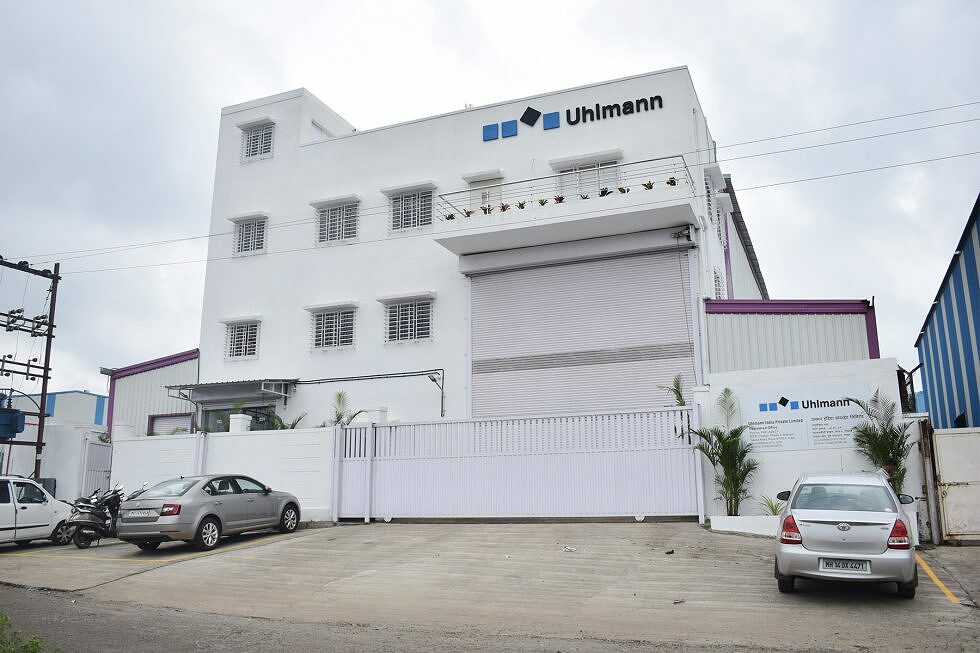
Seldom, one would think of India when popping a headache pill with a sip of water. Incidentally, there is a strong connection: Almost half of all Generic medicines in Germany and more than a quarter of Generic medicines in Europe are packaged in India. The country has developed enormous economic momentum over the past 30 years and has thus become interesting for many companies from all over the world. In 2015, Uhlmann established a company there with its first Managing Director Sumeet Arora.
70 machines
Uhlmann India has added over 40 Uhlmann Group machines in the past five years in the Indian Market putting the total count of Uhlmann Machines to 70 in the country.
Arora, born in 1969, is a thoroughbred businessman. He did his bachelor’s degree in Mechanical Engineering and then went straight into sales. Starting in 1997 when he worked for the largest manufacturer of liquid packaging equipment, he switched to Food and Pharmaceutical process and Packaging Industry. Today he can look back on more than 22 years of experience in the field of packaging. “I’ve been fortunate to be part of an era which has witnessed phenomenal development in the packaging technology,” he says. “Today, packaging is not only for protection of a product. It is a statement.”
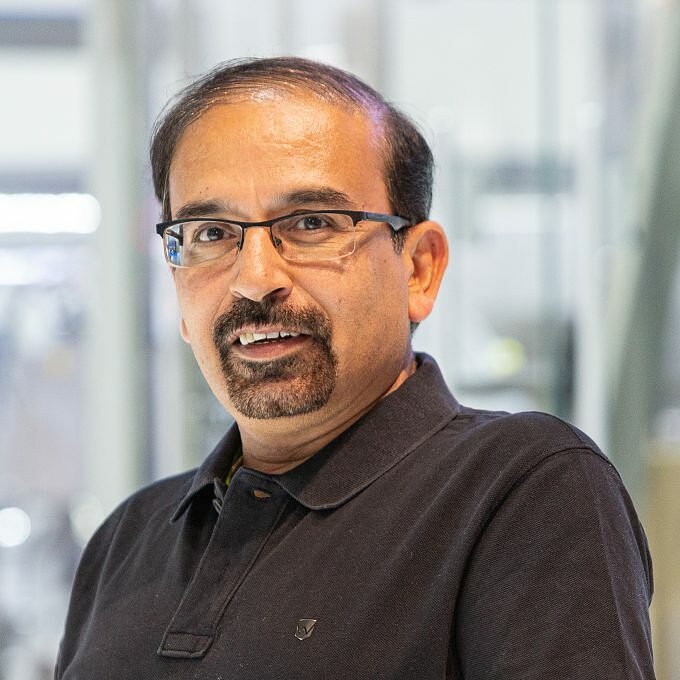
Today, packaging is a statement.
Sumeet Arora, Managing Director Uhlmann India
Price pressure on Uhlmann
“The pharmaceutical market in India is extremely well positioned,” says Sumeet. However, it also has its pitfalls. “Drugs are much cheaper here than in Europe. This also affects the price that can be invested for packaging equipment. That’s the way the market is here.” Hence, the price pressure on manufacturers of packaging machines like Uhlmann is high. Uhlmann enjoys an excellent reputation in India. “The average customer thinks, ‘This is the best thing money can buy,'” Sumeet explains. “And at the same time, they say it’s too expensive for them. We here at Uhlmann India work every day to influence this attitude when we talk to customers. We establish trust and confidence to the client that such an investment will pay off and customers are getting the best value proposition & with exceptional TCO (Total Cost of Ownership).”
Special challenges for the Service
The appetite for investments in machines is there, says Sumeet. But in contrast to Western markets, there is little willingness to spend a lot of money on subsequent costs such as maintenance or repairs. “In India, we can only charge a fraction of the price for a service call that is usual in Europe,” he says. Hence, we have invested heavily in recruitment and training of the competent resources who can seamlessly provide similar support for German Equipment in India.
270 US dollars
Until recently, Indians spend a paltry sum of 100 US dollars a year on drugs, which is steadily rising now as the economic landscape of the society is improving: the current per capita Healthcare spend is $ 270.
Uhlmann India is represented by a strong team, working together in the city of Pune. The Managing Director started there in 2015 with 5 people, today there are 13. Sumeet still drives to customers 5 to 6 times a month. “India is a very diverse country,” he says. “Every 100 kilometers a different dialect is spoken.” So far, Uhlmann India has survived the COVID pandemic well – also thanks to the support from Uhlmann Germany, for which Sumeet and his employees are grateful. “I would never have thought that there would be such a sense of togetherness in a company as large as Uhlmann,” he says. “We all have a fascination for Uhlmann.”