In the context of continuous growth and development, Cremer Speciaalmachines has recently made a significant investment in its staff by starting two groups of a total of 20 colleagues with the Lean Six Sigma Green Belt training in February and April 2024. The green belt symbolizes the third level of training. This step emphasizes Cremer’s commitment to improving quality and efficiency for the benefit of its customers.

The Lean Six Sigma methodology, aimed at continuously improving internal processes, is a core part of Cremer’s Operational Excellence program. With the focus on Planning, Lead Time, Delivery Reliability and Quality, Cremer is taking a significant step forward in strengthening its market position and preparing for future growth.
Systematically improving
The training was provided by René Visser from PEEC (Productivity Engineering Excellence Corporation) and offered the participants not only a thorough theoretical foundation but also the opportunity to apply their knowledge practically. Almost all participants successfully obtained their certificate after an intensive week of training and taking an exam, proof of their dedication and professional competence.

With the execution of our Lean Six Sigma Green belt projects we aim to reduce throughput time and increase efficiency throughout the customer order execution process.
Ad Heijblok, HR-Manager Cremer Speciaalmachines
The program does not end with obtaining certificates. The next step is the implementation of the acquired knowledge in practice through the selection of concrete projects. During a brainstorming session, various problems were identified, which, after careful consultation and assessment against the objectives of Operational Excellence, led to the selection of six projects.
Applying knowledge in practice
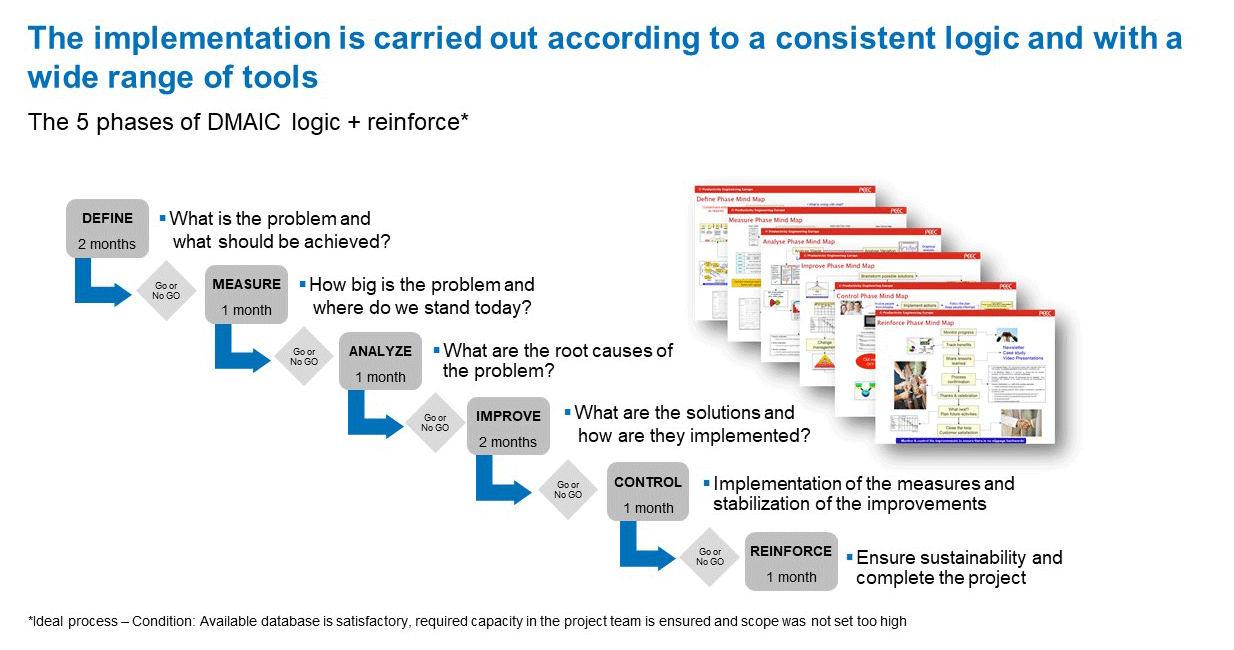
The so-called DMAIC method will be followed for each selected project. The DMAIC method, an acronym for Define, Measure, Analyze, Improve, and Control, forms the backbone of these projects. It offers a systematic and structured approach that facilitates evidence-backed improvements. This methodology underlines Cremer’s commitment to fact-based decision-making and the pursuit of continuous improvement.

With the help of the tried-and-tested DMAIC method, waste can be systematically identified and improvements successfully implemented in the long term.
Michael Schmidt, Lean Manager Uhlmann Pac-Systeme
Cremer Speciaalmachines is proud of this development and looks forward to the positive impact that this training and the resulting projects will have on the organization as well as our employees. With the Lean Six Sigma Green Belt training, Cremer is once again establishing itself as a progressive player that recognizes the value of knowledge and continuous improvement and applies it for the benefit of its customers.