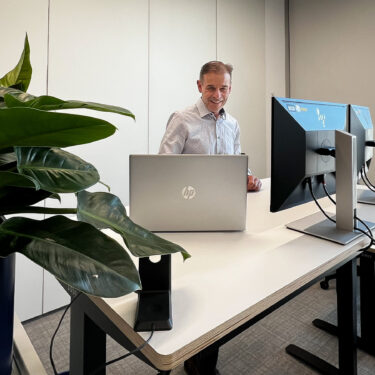
So this is the big moment! Just one small mistake and the whole schedule goes out the window. For a few hours, everything that so many people have been working toward for over one-and-a-half years lies in their hands. And that’s because the “Technical Basis and Migration” sub-project, supervised by Lukas Bulla, Julia Malsam and Stefan Burkert, is creating the technical foundation for the changeover to SAP S/4HANA. And it’s crucial that the migration is implemented efficiently so as to ensure that operations subsequently run smoothly again across all processes, and that Uhlmann is fit for the digital future. Because that is the whole objective of the complex project.

Just one wrong click and that’s it for the planned go live.
Lukas Bulla, System Engineer
Lukas Bulla and his team are keenly aware of these implications during the long weekend leading up to the public holiday on October 3, 2023. Even months later there is one thing he will clearly recall from that weekend: “Just one wrong click and that’s it for the planned go live.” So there’s no need for coffee or energy drinks – despite little sleep and up to 50 working hours per person. Only when they have done their job can the 18 application consultants waiting for their cue connect the more than 40 key sub-systems, like the one for automated goods movements and inventory management in the warehouse, to the new SAP. Then it’s down to the 100 or so key users from the departments to finally check whether everything is working as it should.
0
working hours were invested by IT in the migration
0
working hours invested by the key users in the migration
When the new SAP system goes live, all processes that were previously handled by the old SAP system in every department at Uhlmann Pac-Systeme, including all subsidiaries as well as Wonder and Axito DE, will run on the S/4HANA technology base. The final prerequisite for the go live is that the Uhlmann Group’s IT management gives the go-ahead, taking into account all open risks – which finally comes after a grueling weekend on October 3, 2023 at 6 pm. However, the journey the team jointly undertook with external consultants was anything but plain sailing.
The biggest success factor was the IT team and the key users.
Klaus Kramer, IT Project Manager
It was no picnic. “We had to undertake major efforts throughout the entire project – and, most recently, even more so during the migration weekend – to meet the planned go-live date. The implementation was simply more technically challenging than expected from the outset,” recalls Klaus Kramer, one of the co-project managers in charge of the migration. Together with his co-project manager Helge Stührmann, his credo right from the word go was this: Work fast but stay focused! And above all, don’t lose sight of why we’re doing all this, as Klaus Kramer explains: “With this migration, we are maximizing Uhlmann’s capability to expedite progress on digitalizing processes on a future-proof platform.”
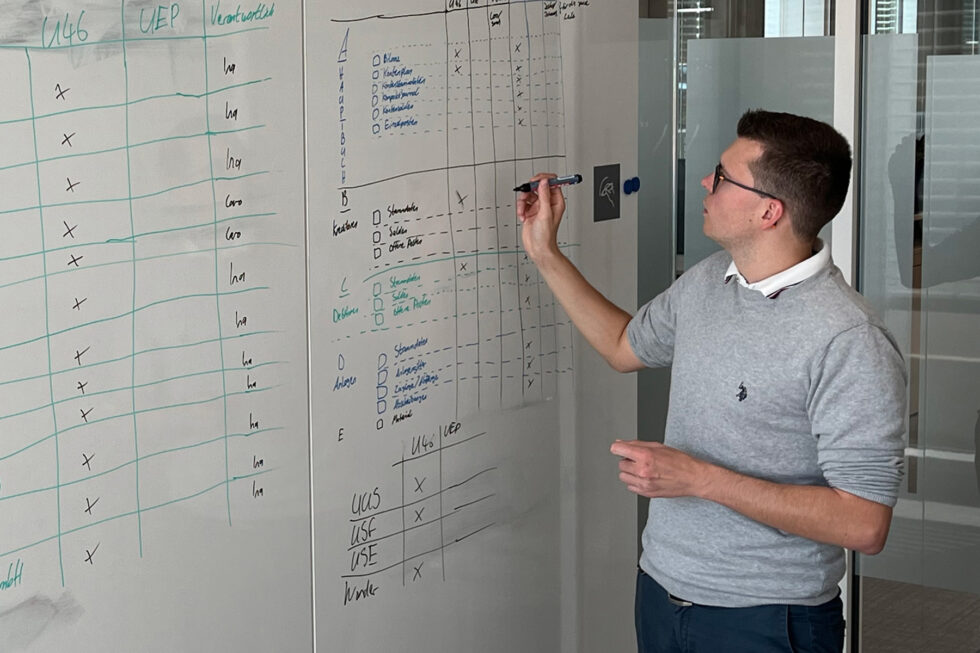
Sometimes it has to be analogue: Johannes Buck synchronising the finance data.
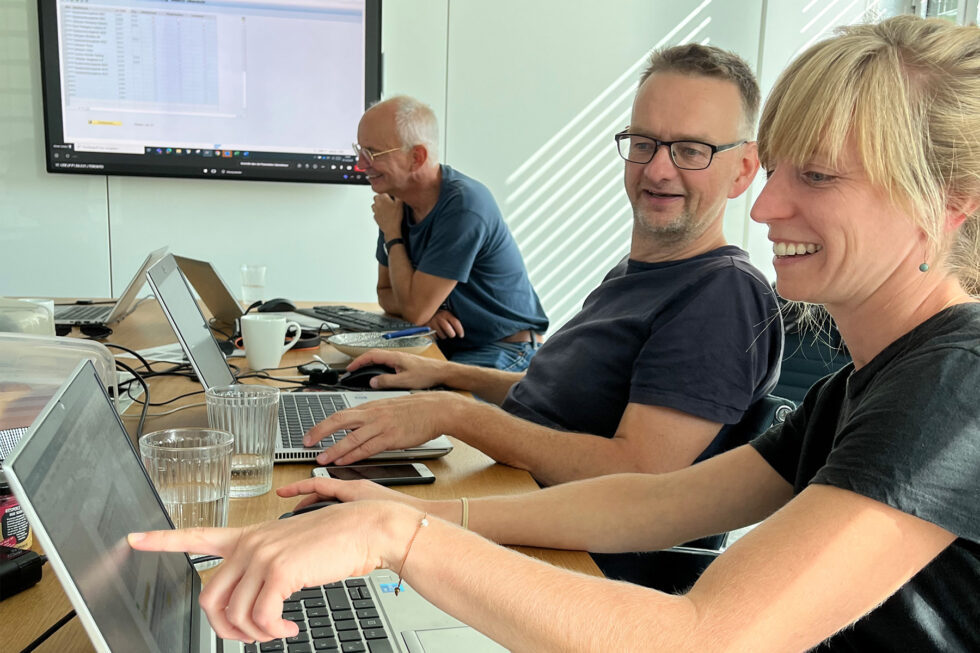
Jacqueline Merkle-Sarosi, Jochen Kürner and Klaus Kramer also had fun at the Go-Live weekend.

The IT application consultants Ole Schott, Wolfgang Schill, Markus Fischer, André Mayer and Oliver Weyhmüller during the go-live weekend.

Michael Florczak and Wolfgang Schill during the functional test of the EWM integration
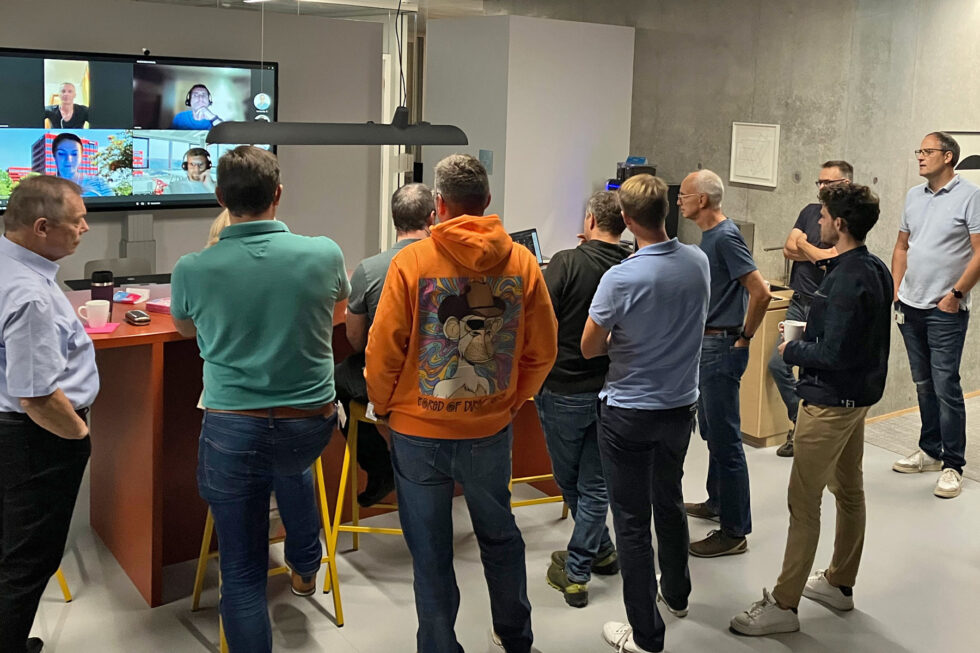
The project team with selected key users at the “Technical go/no-go decision” milestone on Sunday evening.
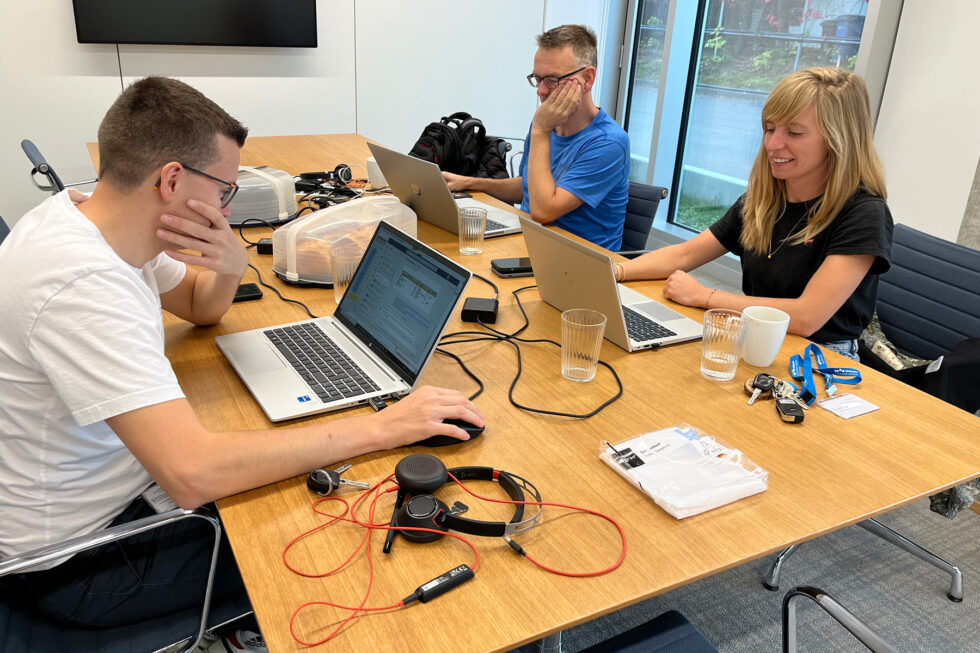
Everything is easier with cake, even for the finance team of Jacqueline Merkle-Sarosi, Jochen Kürner and Johannes Buck.
To minimize the risk of converting to S/4HANA and keep the migration time within reasonable limits, Uhlmann chose a brownfield approach for the conversion. Specifically, this means that all existing business applications are transferred from the existing SAP system to the new one and only a few necessary changes are made during the process. New functionalities, and in particular, process optimizations along the value chain will be introduced in subsequent organizational projects (“Speed+”), but then on the basis of S/4HANA. “Applying this approach was a major success factor,” says Klaus Kramer, “but the biggest one was the IT team and the key users, who are responsible for ensuring that the system works exactly according to the needs of their respective department.”
Countless lines of code
Michael Florczak is one of the 18 application consultants who support the user departments during the introduction of the individual SAP-based business applications. He remembers situations during the project when he thought: “How on earth are we going to manage all this?” Of the 40 sub-systems available, Florczak connected two major ones to the new SAP, including the automated warehouse and thus one of the most crucial ones: “If this one stops working, the company will come to a standstill,” he explains.
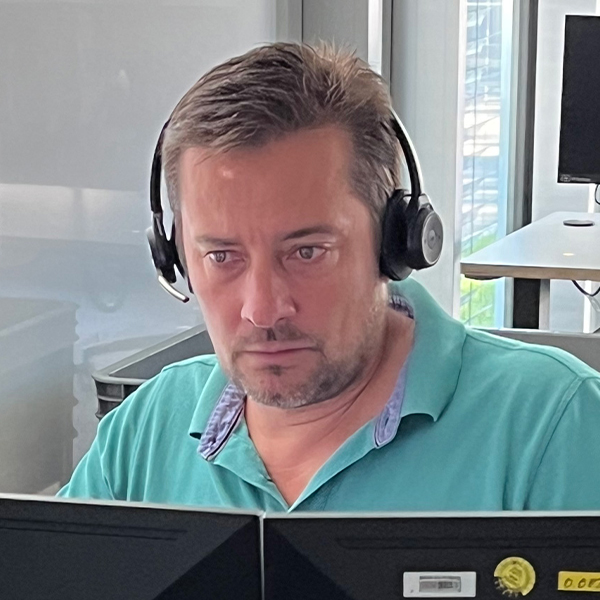
If this one stops working, the company will come to a standstill.
Michael Florczak, Application Consultant
To prevent this from happening, the IT specialists used so-called sandboxes in the project. These copies of the existing SAP system were used to test the migration of existing additional functions and processes to S/4HANA in advance without affecting the main system. To ensure that all additional functions also run under the new S/4HANA system as required by Uhlmann, Wonder and Axito, many – indeed countless – lines of source code for the additional functions had to be adapted.
0
lines of code (LOC) were changed
And yet, for most colleagues at Uhlmann, Wonder and Axito, nothing has changed on the surface. Klaus Kramer puts it like this: “It’s like a car: we still have four wheels and it drives. But we have created the conditions that will enable us to change the entire powertrain in the future.” However, as Michael Florczak adds, “some people now have to get to grips with new buttons and operating concepts because the approach they have become accustomed to for so long has already changed in certain areas.” However, there were no major outcries from the workforce in the months following the changeover. And, when the day of the project wrap-up event arrived on February 16, 2024, the migration team was finally able to breathe a big sigh of relief and celebrate their well-deserved success: the project had achieved its objectives, operations continued to run smoothly, and the timing and budget targets had been met – an outstanding achievement!