Go to: China | Switzerland | Russia | France | Brasil | Netherlands | Germany
China
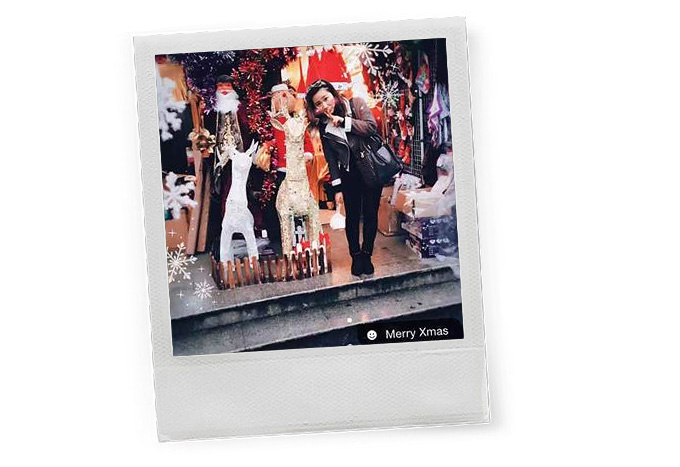
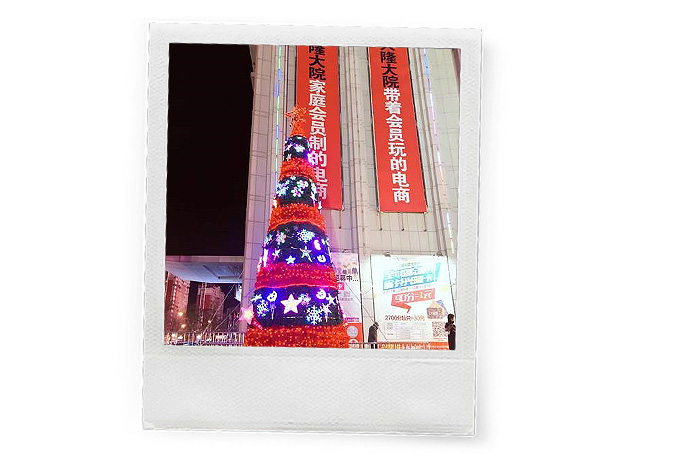
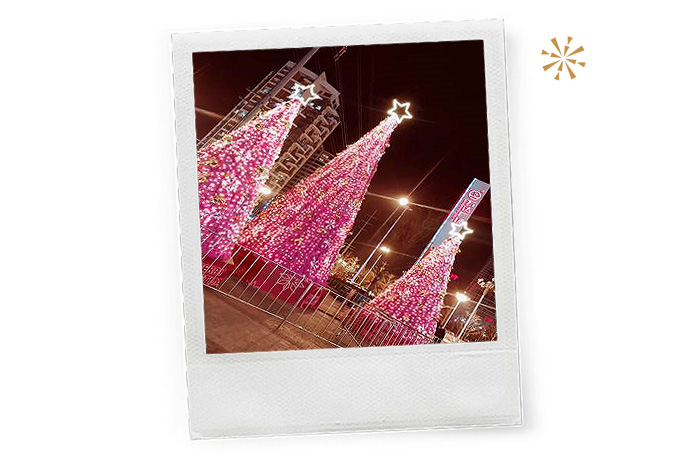
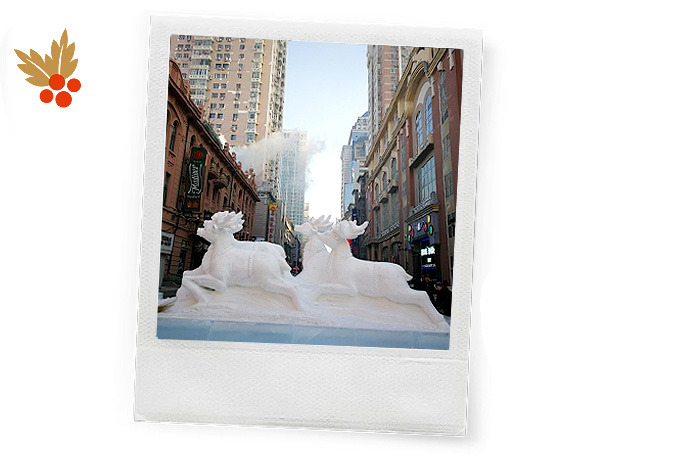
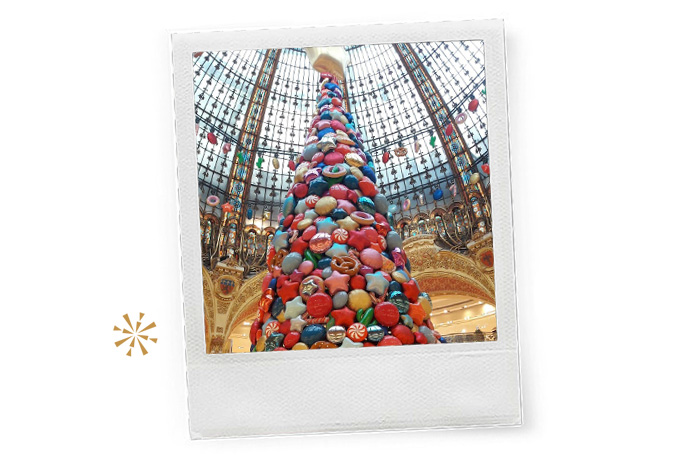
Naturally, there is no long Christmas tradition in China. The people work on the feast days. Our colleague Lily Li Lu nevertheless enjoys the festive atmosphere in the shopping malls where decorations are put up by mid-December. Particularly young people enjoy the opportunity to take photos.
Switzerland
The traditions in Switzerland are very similar to those in Germany. That also means that modern times have their influence: the smartphone is increasingly found next to the Christmas wreath on the festively decorated table. This is reason enough for Manuela Hummel from Uhlmann Höfliger Schweiz to reflect on the conventional festive spirit.
Russia
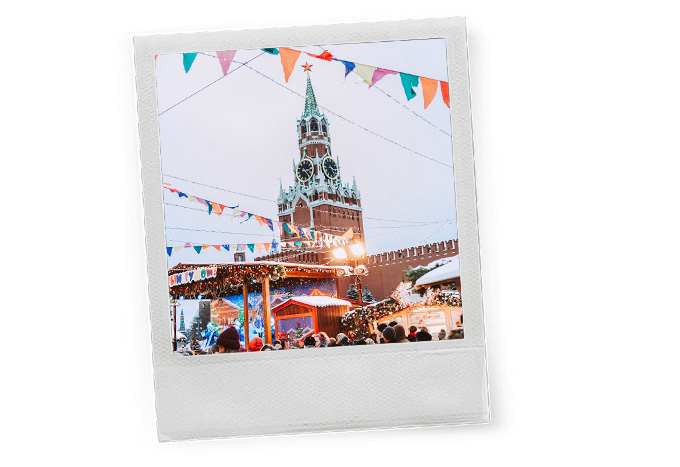
In Russia, Father Frost (the local equivalent to Santa Claus) does not bring children presents on Christmas Eve or on the festive days, but on New Year’s Eve. This means that the exchange of gifts is often accompanied by fireworks. At this time of year, the skating rink in front of the Kreml is of particular significance to Olga Roschina from Pharma Union.

France
Yulia Pleshakova from Uhlmann France likes to listen to the classic song “Petit Papa Noël” at Christmas. Incidentally, the tradition of Santa Claus is kept alive by the state in France. A law passed in 1962 rules that every letter addressed to Santa Claus is to be answered with a personal postcard.

Brazil
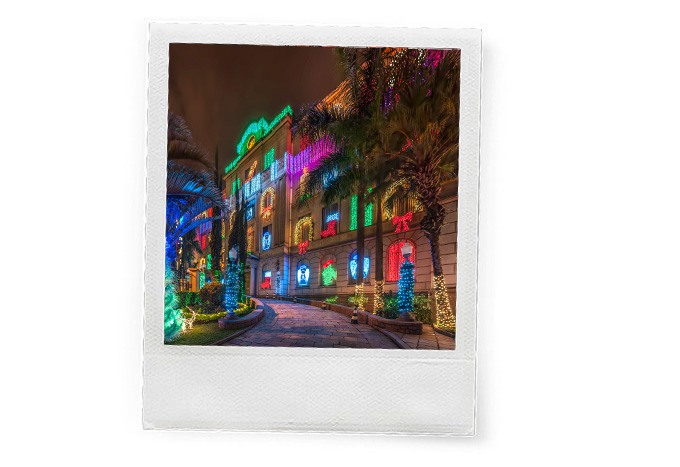
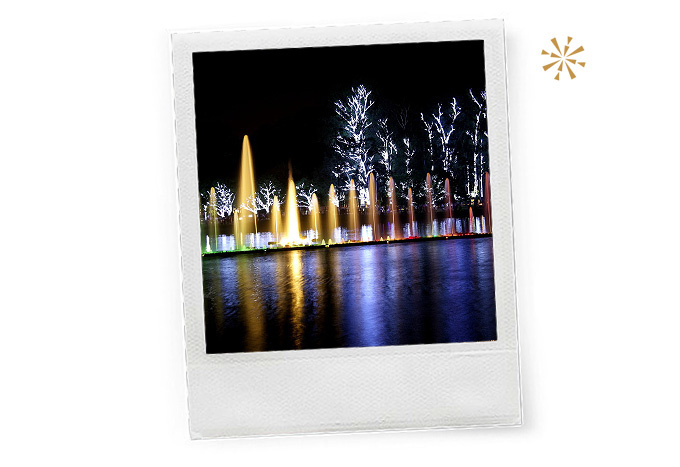
Alline Stampfer gives us an insight into the Christmas traditions in Brazil, the country in which Uhlmann Técnica Ltda. is based, and which glitters at Christmas with illuminations everywhere. “Papai Noel” is likewise important there. In some places, a big event is made of his arrival, with both children and adults marveling when he arrives by helicopter. Not only eyes widen full of wonder at Christmastime in Brazil – belts also probably need to be loosened. The Christmas menu includes richly stuffed turkey, cod, Brazilian-style French toast, panettone, coconut pudding with plums, and lots of fruit. A festive meal is eaten toward midnight on Christmas Eve and again on December 25, when friends and family come to lunch. Of course, there is also no lack of presents in Brazil. They are exchanged on Christmas Eve. Doing a “secret Santa”, or “amigo secreto” as the Brazilians call it, is particularly popular. Variations of this tradition are also common. For example, it may be stipulated that all presents be made of chocolate. The Brazilian post also plays its own “secret Santa” role. It selects those letters addressed to Santa Claus from needy children and shares presents among them. It also publishes the letters so private individuals can select a child and organize a present.

The Netherlands
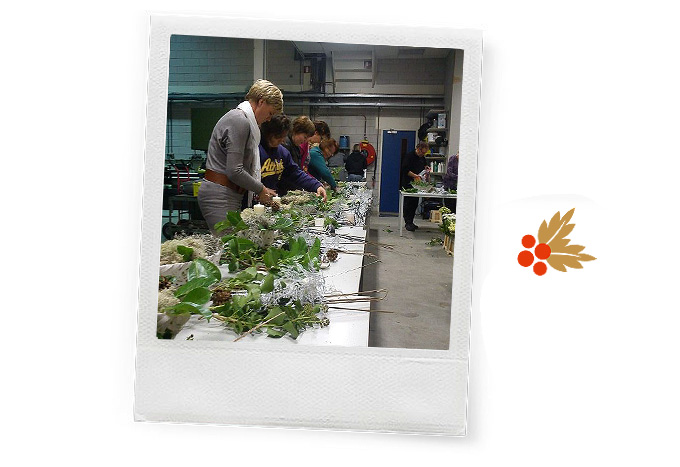
Leonie van Engelen reports that the workers’ council creates a Christmas atmosphere at Cremer in the Netherlands and organizes a joint Christmas cookie baking session. A large Christmas tree is put up in the reception area and smaller ones in the canteens. Another Cremer tradition is the Christmas meal with all colleagues and presents from the company management, such as a gift voucher. The managers often wrap up the presents themselves. The drawing of lots decides who gets which present. Most Dutch families have a Christmas tree at home and lots of candles. Presents are unwrapped on Christmas Eve or on the following morning. The Dutch fortify themselves with a Christmas breakfast or brunch in preparation for a typical tradition: shopping on the second day of Christmas. The shops open in the afternoon and many Dutch people take this opportunity to stroll around the shopping centers.


Germany
It is particularly festive at the Uhlmann headquarters in Laupheim. Beate Glanz reports that every department organizes its own Christmas celebration. There are jovial activities, which can be a visit to the “Winterzauber” in Neu-Ulm (“mountain lodges” of various types), a “whodunnit” dinner, bowling, a visit to the Christmas market or Berg brewery, a relaxed get-together with finger food in a pub, or going for a (fancy) meal.
A highlight for the employees at Uhlmann is the Christmas event. This has developed with time from being a mulled wine gathering in the canteen into a festive “Weihnachtszauber” (Christmas wonderland) in and around the festively decorated “cold hall”. Some 800 employees participated last year.
A traditional element of the “Weihnachtszauber” is the initial music played by the company orchestra as well as speeches held by our shareholder, Executive Board, and workers’ council, who review the highlights of the year and provide an outlook on the future of the company. Culinary specialties are then enjoyed in the company of colleagues – the atmosphere is correspondingly good.


Benita Haberstroh and Jörg Schebetka from Koch Pac-Systeme give us a general and more detailed overview of Christmas in Germany:
Traditions
Particularly the baking of Christmas cookies is a very common tradition in the run-up to Christmas. Many kitchens are transformed into Christmas bakeries during Advent, often with Christmas music in the background to set the mood. “Vanillekipferl” (crescent-shaped, almond-vanilla cookies) are a classic among the wide selection of goodies.
Visits to Germany’s most attractive Christmas markets are a must for many people. One of the oldest – and probably the most well-known globally – is the “Christkindlesmarkt” in Nuremberg. It attracts over two million visitors each year.
Whether gingerbread cookies (Lebkuchen), fruit bread, or “Zwetschgenmännla” (figures made of prunes and walnuts), or grilled sausages from Nuremberg – food plays a key role in the festive season, but drinks are not to be forgotten either! Mulled wine is the classic drink: whether red or white, the popular, hot alcoholic beverage made of wine, sugar, and spices warms up countless visitors in the cold season.
Lebkuchen, Spekulatius (almond cookies), Christstollen (rich sweet bread) & Co. are already to be found in abundance on German supermarket shelves from September – for Christmas gripers perhaps a curse, but good fortune for those with a sweet tooth.
Santa Claus
The most exciting part of Christmas for children is Santa Claus, the significance of whom they cannot begin to understand. Whether at a Christmas market or at home when presents are exchanged: no Santa, no Christmas! In his red robes trimmed with white fur, and his long, white, bushy beard, he brings a smile to children’s faces when he takes presents out of his sack.
Decorations
The period of Advent is accompanied by an Advent wreath in many households. Usually woven out of fir branches forming a circle, it decorates a table or can be hung from the ceiling. The four candles are lit one after the other on each of the four Sundays in Advent. Probably the most well-known Christmas rhyme associated with an Advent wreath is:
Advent, Advent,
a little light is burning.
First one, then two,
then three, then four.
Then Baby Jesus is at the door.
Advent calendars in the month before Christmas are enjoyed by children and loved ones. A “door” is opened every day from December 1 through December 24. The calendar shortens the wait and counts the days in anticipation of Christmas.
Music
Music plays an important role at Christmas time. Many families gather round their Christmas tree and sing on Christmas Eve. Popular German songs include “Alle Jahre wieder”, “Fröhliche Weihnacht überall!”, “Morgen, Kinder, wird’s was geben”, or “Stille Nacht, heilige Nacht!”. Over the past decades two other songs have become classic earworms: “Last Christmas” from Wham! and “Do They Know It’s Christmas?” from Band Aid. Both songs came out in 1984 and it is hard to imagine Christmas without them in the meantime.