Müller: Mr. Kappler, what made you decide to apply for a job at KOCH?
 Kappler: Actually, a minor detour was involved. One of my fellow students wrote his thesis while employed by KOCH. He recommended the company and organized an appointment for me. I received an acceptance within a day – in addition to a second one from another company. I decided in favor of the other job as the company was better known. KOCH was still a genuine insider tip. However, after having made the decision, Dieter Koch called me and said: “Mr. Kappler, should you ever have any regrets, get in touch.” When I saw a job vacancy at KOCH for an engineering manager a few years later, the time was ripe to accept this offer – even though I was given an earful along the lines of “We told you so”. I have been with KOCH ever since and sensed the great faith placed in me from the start. I have never regretted this decision. What about you? What led you to start an apprenticeship at KOCH?
Müller: I often drove past KOCH and when I finished school I looked more closely into what actually takes place behind the familiar walls. I had resolved to opt for an employer of manageable size in order to be able to get to know all areas and as many employees as possible within a short time. I did not just want to be a number in a large corporation. That was a decisive factor for me. Everyone I had spoken to about KOCH was positive. I wanted to discover whether the company has the same positive impact on me and makes me feel welcome.
Kappler: What is important these days to young people like you regarding your employer?
Müller: I think that varies greatly. The personal interaction between colleagues is very important in my opinion – not only the exchange between young colleagues, but also the sharing of knowledge with more experienced employees. A newcomer then has a clearer view at the beginning regarding whom they can approach and does not feel left alone. How was your start? Do you recall your first day at KOCH?
 Kappler: Not really, but what I do still know is that my workplace on my first day was rather improvised. I sat at a small side table behind a drawing board. That soon changed, fortunately. Before long, I also attended customer visits without detailed knowledge of everything we produce. Nevertheless, customers were interested in my opinion. As a result, I learned to be spontaneous and to trust my instinct in my early days. You joined us just over a year ago. How do you find the atmosphere in the company?
 Müller: Friends, who already worked for KOCH, reported on the very positive working atmosphere and about how one is made welcome here. That is true. I look forward to my work and my colleagues every day. After all, I spend a large proportion of my time here. It is important that the human factor plays a major role. The relations between the departments are also always full of respect. Particularly at the beginning, I need more assistance with some things. It means a lot to me when I sense that the doors are open to my questions. What I also rate highly is the trust placed in employees, which you mentioned. I see that I already have a certain amount of responsibility. After 26 years, you can undoubtedly tell me more about the spirit of the company …
Kappler: Particularly the challenging construction of specialized machines, which is our business here at KOCH, can only function when all employees pull together. That is the spirit practiced here. The teams do their utmost to accomplish their projects. Characteristic is that we never stand still, but always move with the times. Each and every one is willing to adapt to meet the needs of our customers and markets. We preferably want to bring out tomorrow what the market requires the year after next. After all, we have never believed it good enough to be satisfied with what is already on the market. Furthermore, KOCH cultivates close relations with its customers. Practically all employees are in regular contact with our customers, and get to know their pains and problems. Accordingly, we have a deep customer understanding in the company.
Müller: What has changed since you joined the company?
The head of logistics at the time would go to the front of the hall, whistle through his fingers, and call: “Who ordered this part?” That would no longer function these days.
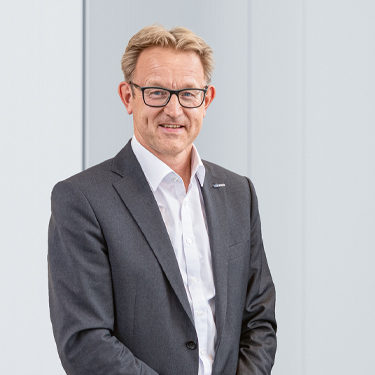
Karl Kappler
Kappler: Our expansion inevitably led to changes. The workforce numbered 65 when I joined KOCH. Over the last seven years we have grown from 200 to 400 members of staff. We had to establish structures and work processes. As an example, when a new part was delivered, the head of logistics at the time would go to the front of the hall, whistle through his fingers, and call: “Who ordered this part?” That would no longer function these days. The realization that structured work procedures were necessary was very important. Another key issue is documentation. Previously, it was primarily the case of a customer coming and wanting a machine for his packaging job. We designed it for him and he tested it on our premises. Any necessary modifications were made before delivering the machine. We have a completely different approach today.
The customer must describe what he needs in a user requirements specification (URS), which forms the contractual basis. A spoken agreement and a handshake no longer suffice. Everything is documented these days – from the quote to the test reports, and to subsequent retrofits. As we build specialized machines, this documentation is very important. Time and again, we come across matters that have never been encountered before. Once documented, we can draw on these topics and learn from them. That applies to all departments in all countries.
Another of my main priorities was to change our engineering process. When I started at KOCH, the engineering department drew what Assembly was currently building. That was where the know-how was focused. In the meantime, we know that we are much faster if we first draw up the construction plan and then let the assembly experts implement this. That was a crucial a-ha moment and, as a result, Engineering has expanded and become more efficient over the years.
Müller: Have you witnessed milestones in the company history?
 Kappler: One of the major milestones was our step across the pond – the founding of our first overseas office in the USA. That was the first time that we sent employees abroad for a longer period and also engaged local personnel for the subsidiary. This was repeated a few years later in Singapore in 2003. What also sticks in my mind is what Dieter Koch instigated in 1999. He asked: “We build blister machines, but what follows on?” Consequently, we moved into the secondary packaging market, acquired a company in Pirmasens with 15 employees in 2000 that developed and built machines for this sector, and were able to resell that company in 2011 after having tripled the workforce.
Another key milestone, of course, was the acquisition by Uhlmann in 2006. I was one of the first employees to be involved in the thoughts of Dieter Koch. His decision not to sell to the highest bidder, but to move to where we are best suited was a clever move. In my opinion, we could not have done better. Moving from one family-owned company to be integrated into another family-owned company allowed us to preserve our atmosphere. However, these are all stories of the past. How do you envisage your future path at KOCH?
The many departments I have come to know are helping me to discover my strong points.
Sarah Müller
Müller: I find it difficult to decide where I might see myself in years to come. It was the best decision I could have made to start an apprenticeship at KOCH. The many departments I have come to know are helping me to discover my strong points. At the end, I think it will be more likely that I will be able to say what appeals to me most, what suits me best. If everything falls into place – on my part and that of the company – I would be pleased to find a role at KOCH and further my career. Perhaps you have some advice for me based on your experience?
Kappler: You certainly should always be willing to adapt to the situation and be prepared to contribute to change. Evasion it is not an option. Courage and commitment promote progress in the company. Decisions are no longer only made at the very top. They rest on many shoulders at KOCH and we are grateful when young people contribute their ideas and participate in decision-making processes. That also makes one personally proud and adds a sense of satisfaction to one’s daily work. Furthermore, make the most of an opportunity to go abroad. An overseas trip – if not through KOCH, then through the Uhlmann Group – gives one valuable experience.