If you’re looking for Alfred Mayer, you’ll usually find him way up high. Often as high as 2,000 meters above the ground. His aircraft: a kite, or more precisely, a hang glider. The self-supporting structure is made of carbon fiber and, with its rigid wings, has a wingspan of nearly 14 meters. Hanging -or rather lying – below is Alfred Mayer in his harness, the aerodynamic full-body suit called the Kokon.
Way up high
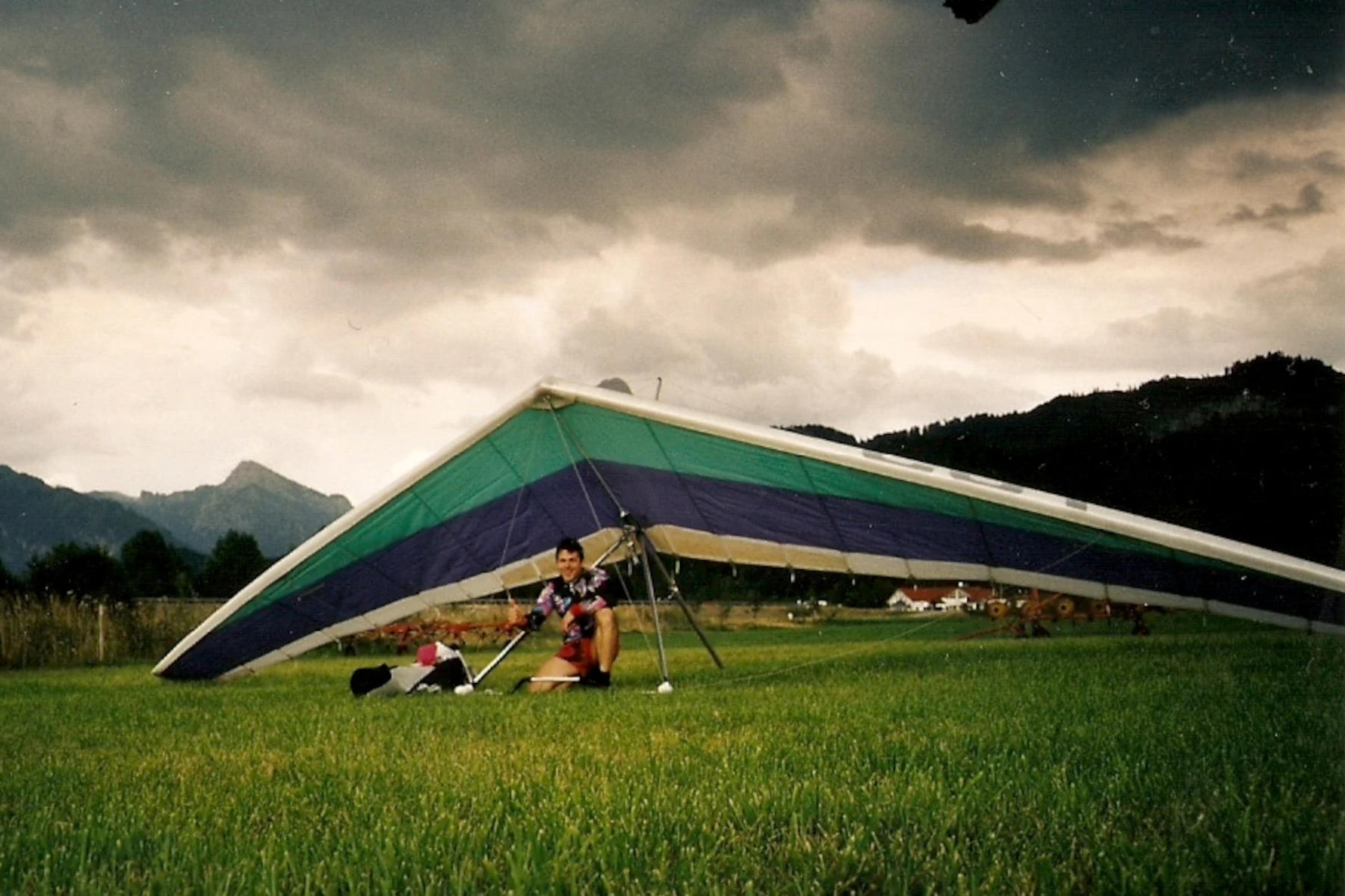
Since 1985, he has preferred to spend his free time from spring to fall in the air. Back then, hang gliding was sweeping across Germany as a brand-new and affordable sport. Alfred Mayer seized the opportunity. He traded in his model airplanes for a hang glider and completed his flight training alongside his father. After passing three exams – both written and practical – he became a newly certified hang glider pilot. Now nothing can keep him grounded.
Since then, Alfred Mayer has been flying every spare minute he has. As soon as the weather cooperates, he’s drawn outside – or rather, up into the sky. In flight, he sometimes covers 160 to 200 kilometers. To fly these routes, hang gliders rely solely on thermal currents. They circle in the updrafts until they reach the cloud base—that is, the lower edge of the clouds—and then glide back down to that altitude in search of the next thermal current, heading toward their planned route. And after some landings, Alfred Mayer doesn’t even know where he is at first. “Luckily, there’s Google Maps and club mates or family members who, in such cases, take over the driving duties and pick me and my hang glider up again,” says Alfred Mayer with a laugh.

“Always on mind”
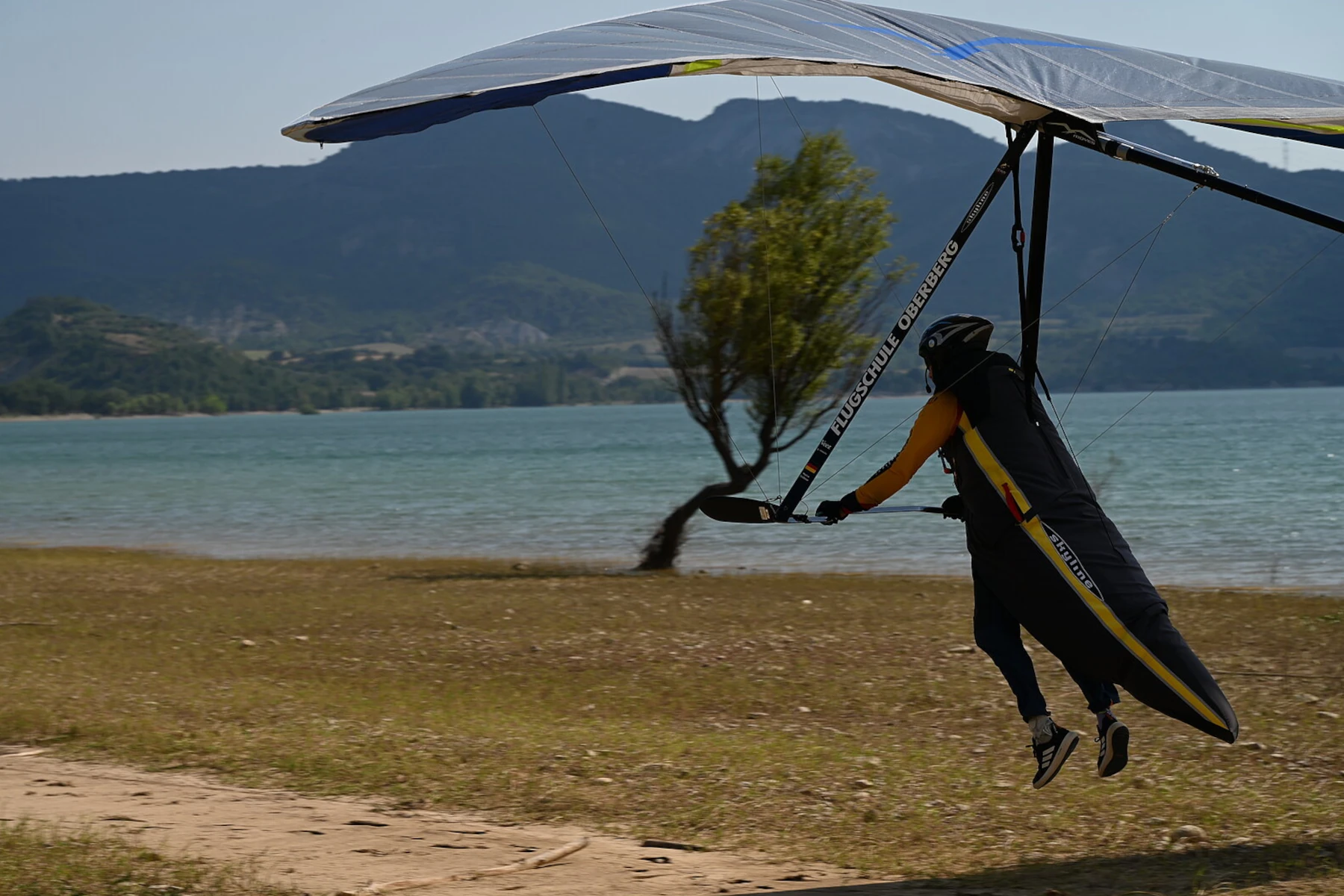
Flying takes time: “It’s definitely a very time-consuming hobby,” he explains. “You should plan on spending at least half a day to a full day for a single flight.” Basic physical fitness and stamina are also important. The 62-year-old stays in shape by running, cycling, and working out at the gym. Hang gliders need the most strength for takeoff and landing, as well as for carrying the 42-kilogram aircraft.
The changes in altitude also take a toll on the body. “And your mind is flying along with you!” emphasizes Mayer. After all, many decisions have to be made during a flight – sometimes consciously, sometimes intuitively. “When flying, you should therefore always keep a clear mind; all your senses are needed,” Mayer stresses. Because there’s always the big unknown: the weather. That’s why hang gliders need extensive meteorological knowledge.

To fly, you have to have a clear mind.
Alfred Mayer, UEDL, Service Desk Manager, Uhlmann Pac Systeme
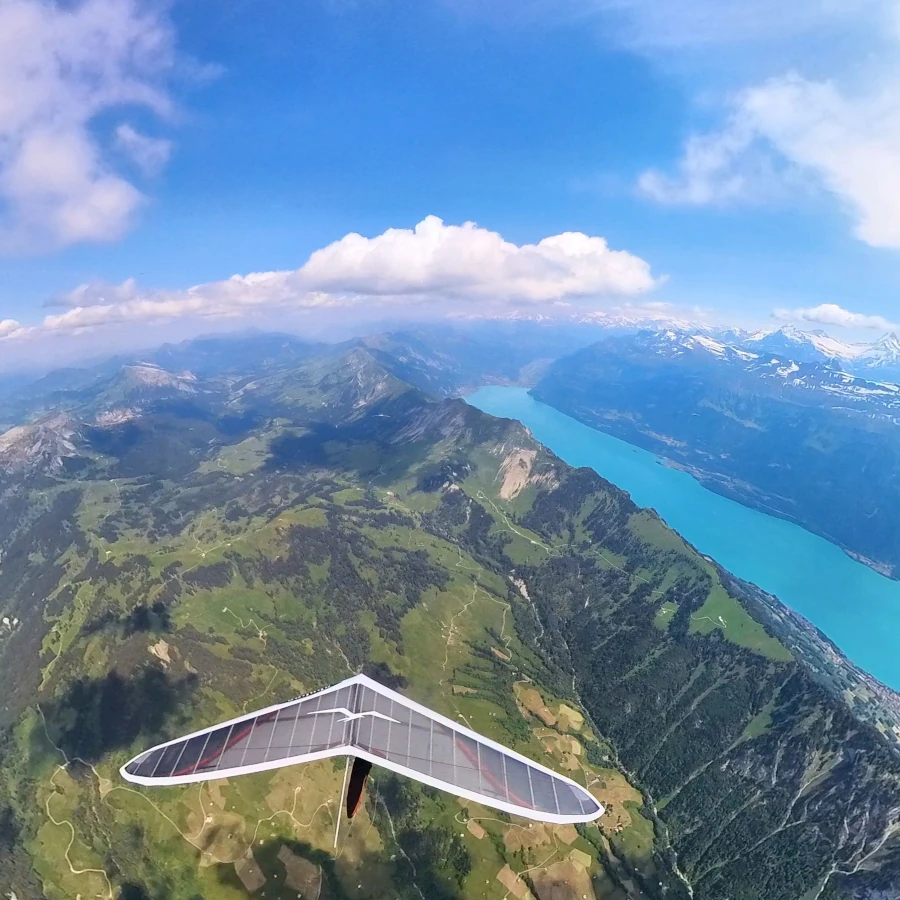
Alfred Mayer is convinced: it’s worth the effort. Once in the air, he’s rewarded with breathtaking views and sometimes even very special encounters: “On one flight, an entire family of eagles accompanied me – they were using the same thermal!” he says with a laugh.
These days, the enthusiastic hang glider no longer takes to the skies just as a hobby. Since 2013, he has been competing for his club, TSV Seissen. He now also competes for the German national team – he has already participated in three World Championships. The last one took place in 2025 in Àger, Spain. And Alfred Mayer and his teammates landed unerringly in second place.
Highlights of the 2025 World Cup:


Preparations
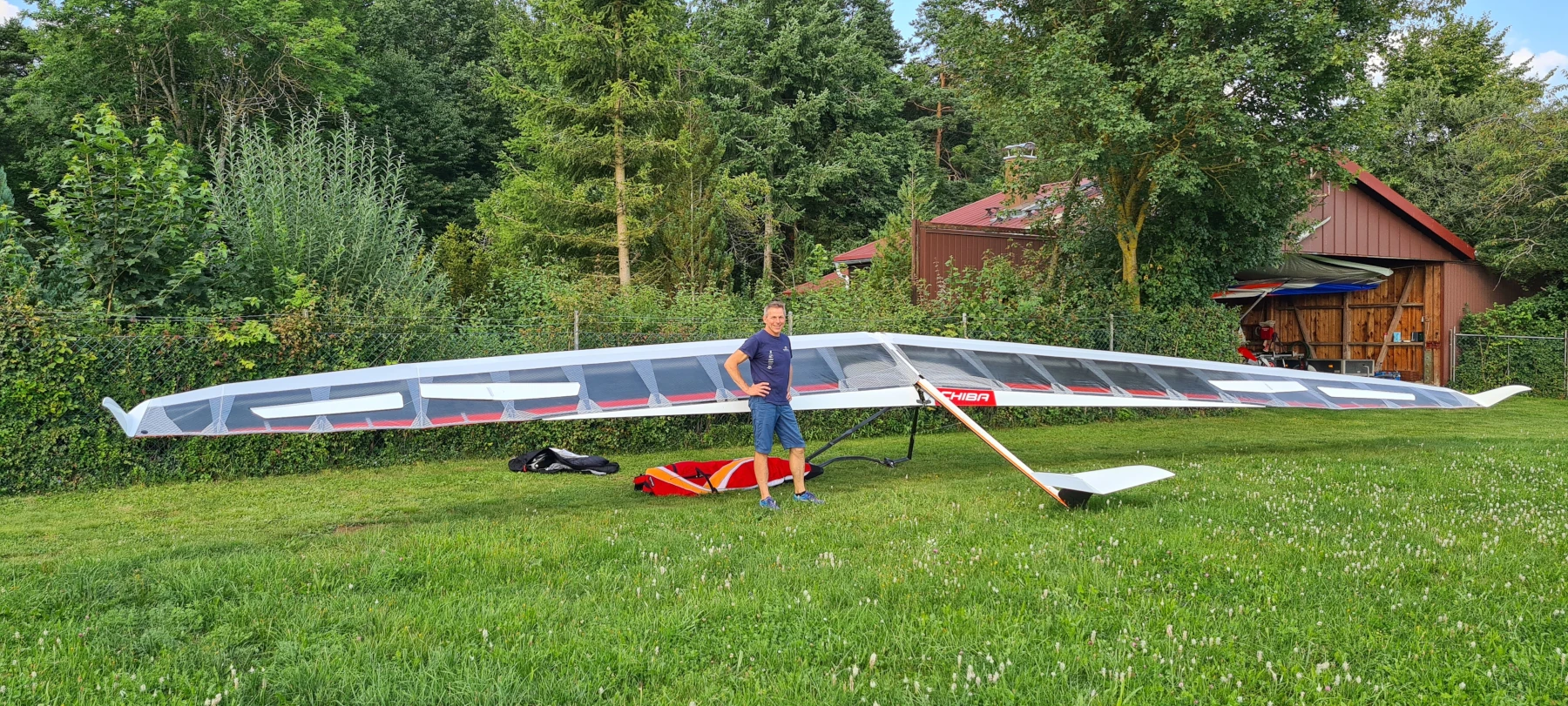
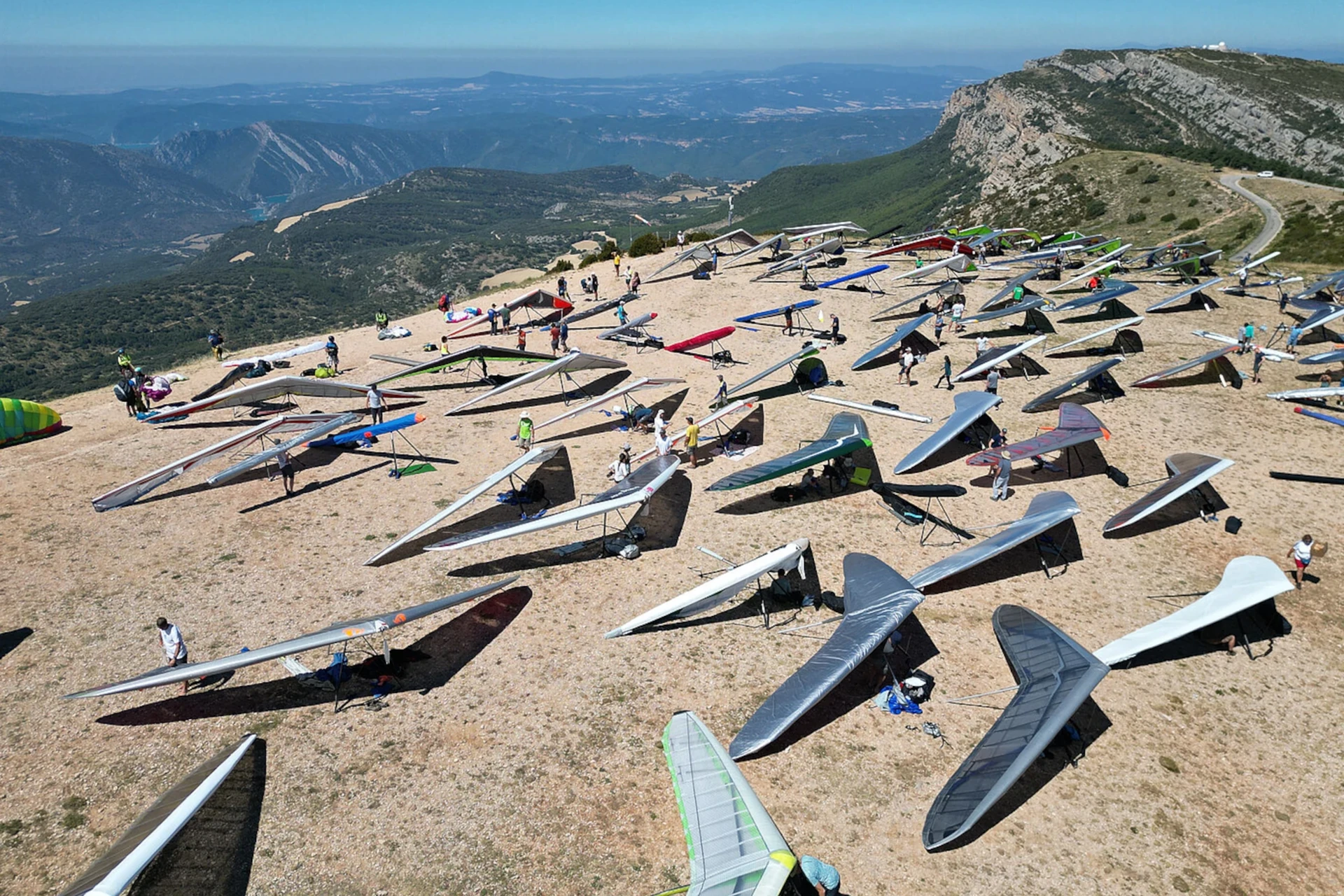
At the World Hang Gliding Championships in Àger, Spain, Alfred Mayer is setting up his glider for the international competition. He qualified for the national team by participating in four competitions per year.
Top International Pilots
149 pilots from 32 countries around the world will give their all over the course of nine competition days and six flying days. They will compete in two categories: flexible and rigid kites. The flexible hang gliders are controlled purely by shifting one’s center of gravity, while the rigid-wing gliders feature semi-aerodynamic controls. The latest designs achieve a glide ratio of 1 to 17, meaning that from an altitude of 1,000 meters, they can glide 17 kilometers without an updraft.
Briefing
Before each competition day, participants are briefed on their “task.” This is a flight route defined by GPS waypoints that pilots must complete during a competition. It consists of a starting point (start gate), several turnpoints (waypoints), and a finish line (goal). The real appeal lies in finding the fastest route through this task while taking into account sunlight, thermals, wind, geography, and tactics.
Done!
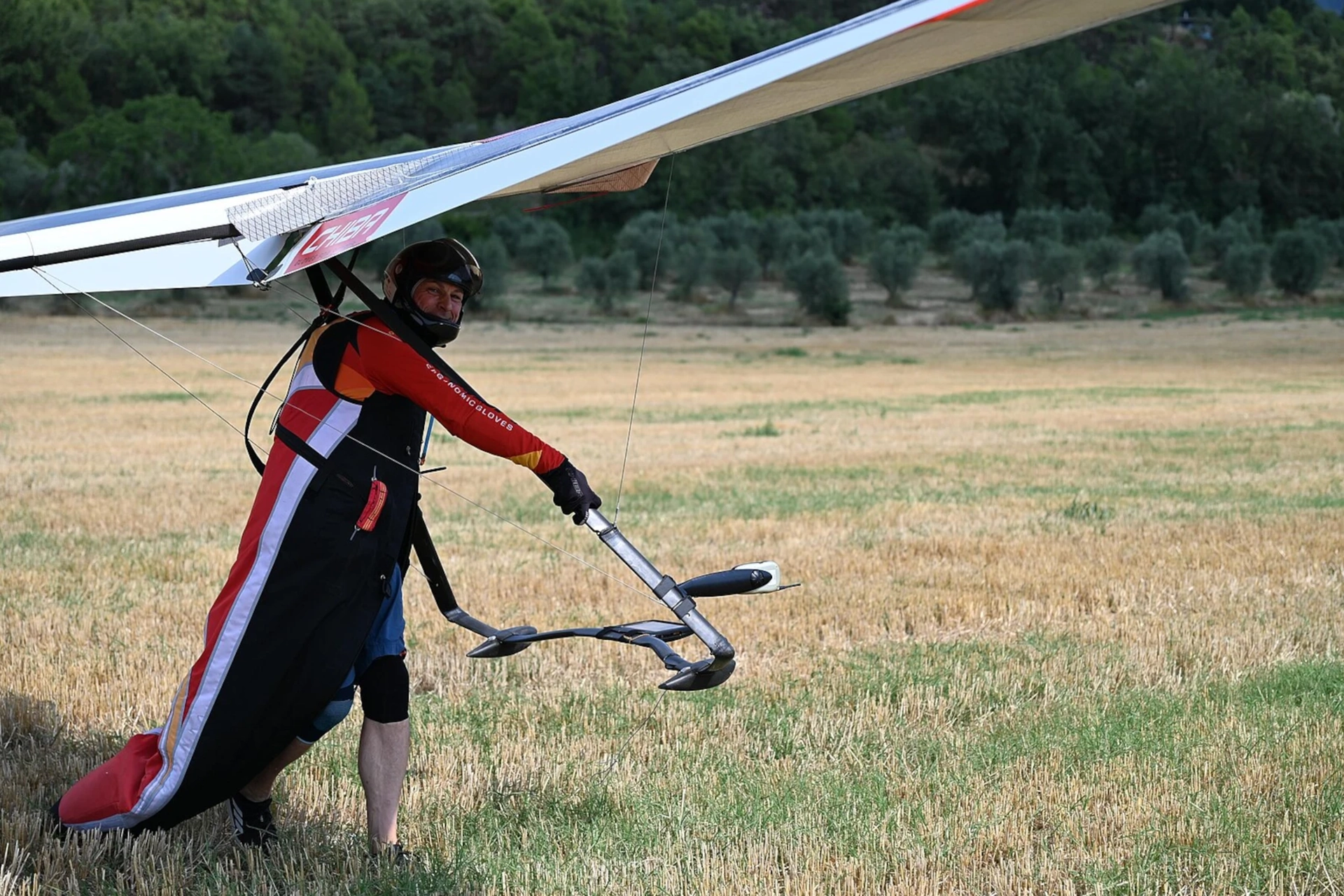
Happy and content, Alfred Mayer lands at the finish line after his flight – on a stubble field near Tremp. The World Championships demanded everything the participants had to offer due to the sometimes challenging terrain.
Off to the podium
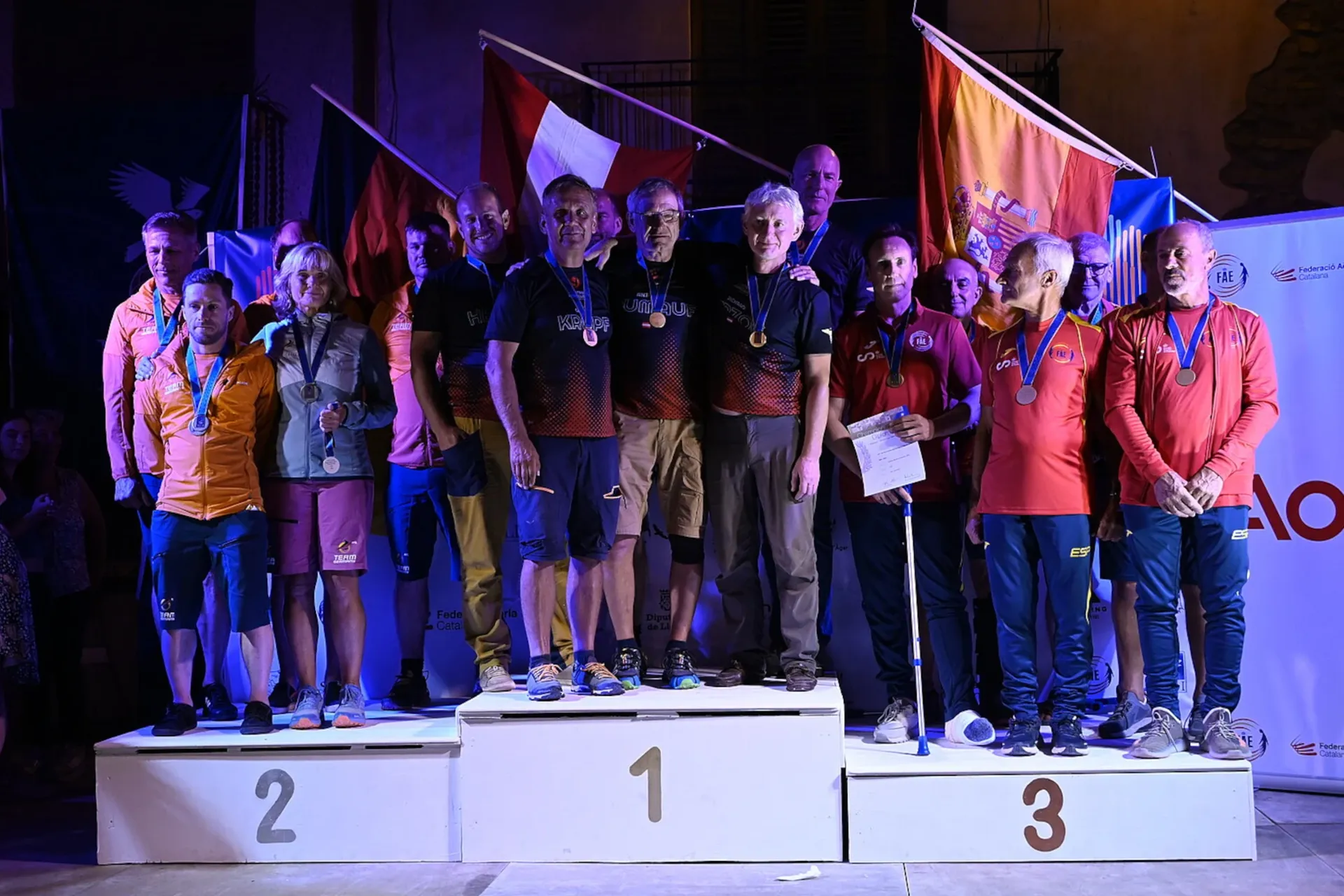
Together with the German fixed-wing team, Alfred Mayer ultimately won the silver medal. A strong performance!
Hang gliding – from space exploration to recreational sports
Modern hang gliding originated in the United States and is based on an invention by Francis Rogallo. Francis Rogallo was an engineer at NASA and developed the Rogallo wing concept in the 1950s. It was a flexible, foldable wing that NASA initially investigated for use in spacecraft landings and experimental parachutes. Even though NASA ultimately did not use the system for spacecraft, Rogallo’s flexible wing became the basic principle of modern hang gliders: Today’s standard wings derive their shape, controllability, and lightweight construction directly from his “flexible wing.” In short: Without Rogallo’s NASA research, today’s hang gliders would not exist in their familiar form.