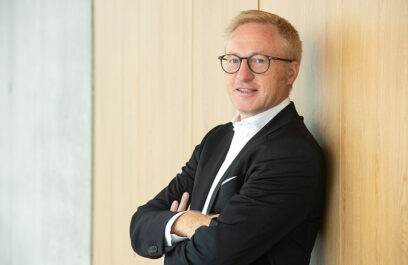
Mr. Reiter, what does your job as CTO at Uhlmann involve?
As CTO at Uhlmann Pac-Systeme, I am responsible for both product development and the entire order processing chain – from requirements and project management to engineering, supply chain, quality, and assembly, right through to successful implementation at the customer’s site. My focus is always on providing an integrated solution comprising machinery, software, and service.
What, in your opinion, makes Uhlmann unique?
For me, Uhlmann is a place where cutting-edge technological expertise and teamwork come together. It is a company with extensive know-how, and a unique culture. I am impressed by the loyalty and commitment our employees demonstrate in their work. They also bring to the table in-depth expertise—and the determination to always find a solution for the customer, even when the going gets tough. Every day, I see people here who are passionate about shaping the future.
What do you particularly like about your job?
I am fascinated by how ideas can be translated into successful solutions. And I love being able to help shape the entire process: from the initial concept to development and implementation, right through to successful application at the customer’s site. For me, the key to success is cross-functional collaboration. And, of course, I am inspired by the technology itself: when we boost our innovation speed using new approaches like, say, AI, it creates scope for what really matters – creative ideas, bold solutions, and real benefits for the customer.
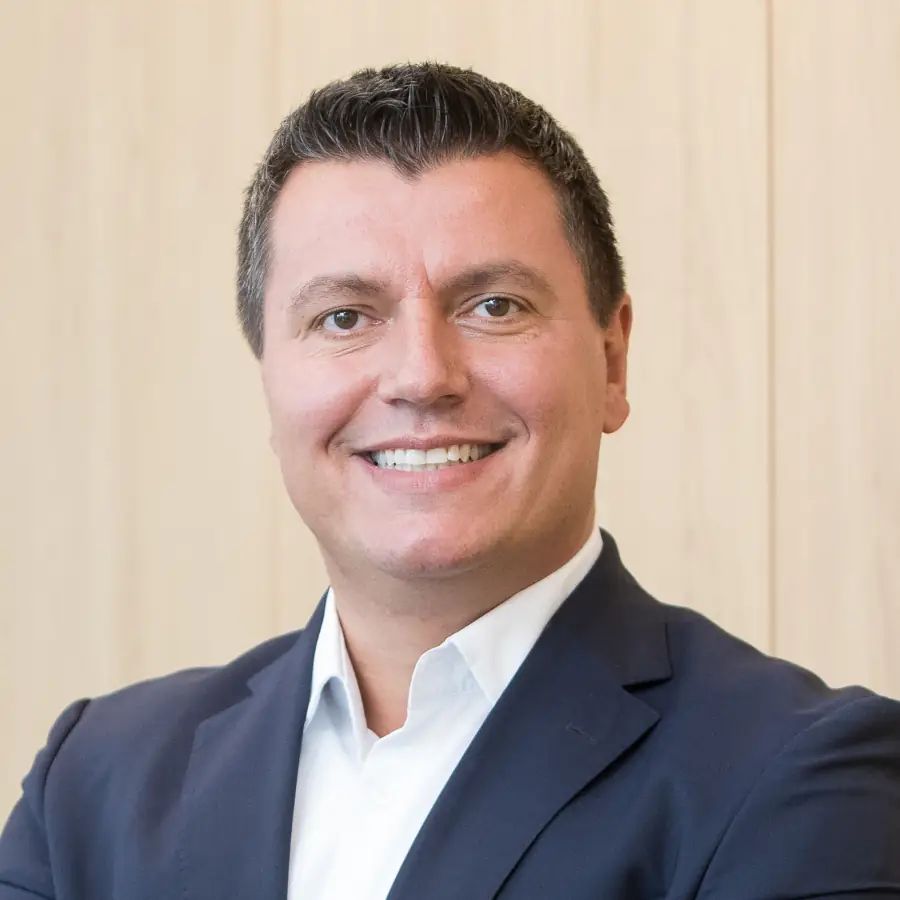
I am fascinated by how ideas can be translated into successful solutions. For me, the key to success is cross-functional collaboration.
Cristian Reiter, CTO Uhlmann Pac-Systeme
What is important to you in your daily work?
It is important to me that technology not only works – but also has an impact. I value clarity, responsibility, and speed. Our solutions should make a difference for our customers—and to achieve this, technology, processes, and people must work together. With NextStep, we create the conditions for implementing ideas faster and in a more targeted manner. And I believe in ownership: when teams know what is important and have the freedom to take initiative, we get exceptional results.
What issues are you focusing on at present?
At present I am particularly looking into how we can systematically bolster our innovativeness while also becoming significantly faster. Because both of these factors are crucial to safeguarding our future. Changing markets, spiraling cost pressures, and global geopolitical uncertainty are forcing us to re-examine our past recipes for success. Not because they were bad—on the contrary, they made us successful. But they no longer apply to the same extent today and need to be refined. It’s about pooling responsibility, simplifying processes, and striking out boldly in new directions.
What, specifically, do we need to change?
We need to think and act more across divisional boundaries. Until now, we have often worked in silos, which has helped us grow quickly. However, as a global company, collaboration is becoming increasingly important. The interaction of individual areas is crucial if we want to offer our customers the complete solutions they expect.
For us, AI is not an end in itself – it is a tool for achieving impact.
Cristian Reiter, CTO Uhlmann Pac-Systeme
What are the biggest technological challenges today?
For me, the biggest challenge lies in navigating the conflicting aims of finding the ideal technical solution, getting it implemented sufficiently fast, while also achieving the economic target costs. A solution may be technically brilliant, but if it takes too long or becomes too expensive, it loses its impact. This requires us to set clear priorities, think in modular terms, and incorporate economic aspects into development at an early stage. This is a cross-departmental task that requires us to strive for the best internal compromise.
What role does AI play at Uhlmann and how do you see it developing in future?
For us, AI is not an end in itself – it is a tool for achieving impact. Personally, I see AI as a catalyst for innovation. It helps us recognize complex patterns, support decision-making, and optimize processes. But the key point is that AI must be integrated into our solutions – not as an add-on, but as part of a well-conceived system architecture. I believe the future lies in hybrid approaches where humans and machines work together. AI can help all of us be faster – but it must also be transparent, safe, and economically viable. I am convinced that AI will continue to evolve – not as a substitute for people, but as an enabler for better solutions.
The exact roadmap is set out in our AI strategy, which we will be presenting later this year. Our power users have been using Copilot for some time now, for example to quickly extract our customers’ core requirements from hundred-page-long documents and create customized offers. AI is also already helping our service department to analyze key issues more quickly.
Where do you currently see risks and opportunities?
Opportunities and risks are two sides of the same coin—the big issue is how we deal with them. Technological upheavals, volatile markets, and rising expectations create pressure—but also enormous potential. The main risks, as I see it, lie in being overwhelmed by complexity, slow decision-making processes, and getting bogged down in details. Opportunities arise when we set clear priorities, boldly break new ground, and consistently leverage our strengths. Harmonizing our technology, organization, and culture, will enable us not only to respond – but also to shape the future.
My role, as I see it, lies in creating a climate that enables strong teams to develop bold solutions—and implement them quickly and effectively.
Cristian Reiter, CTO Uhlmann Pac-Systeme
What are your plans for your area of responsibility in the coming years?
My plans are driven by a desire to actively shape change. We are faced with the challenge of developing our organization in such a way that it remains a technological leader, is economically successful, and even more customer-focused. This includes integrating new technologies such as AI in a meaningful way, further streamlining our processes, and strengthening cross-functional collaboration. My role, as I see it, lies in creating a climate that enables strong teams to develop bold solutions—and implement them quickly and effectively.
What has changed in your view since you joined Uhlmann’s management board four years ago?
We have made significant progress. We have successfully navigated the coronavirus crisis, expanded our global presence with the ECO700 in China, and advanced our parenteral strategy technologically with the PTC200. In terms of production, we have been able to measurably increase productivity, further cut quality costs, and sustainably boost the resilience of our supply chain. Another special milestone was the merger of our machine and digital divisions – a key contribution to shaping our course for the future. All of this was done with the aim of developing our culture in such a way that it not only allows change but actively shapes it. In summary, we can say that we have achieved a great deal together—technologically, organizationally, and culturally.
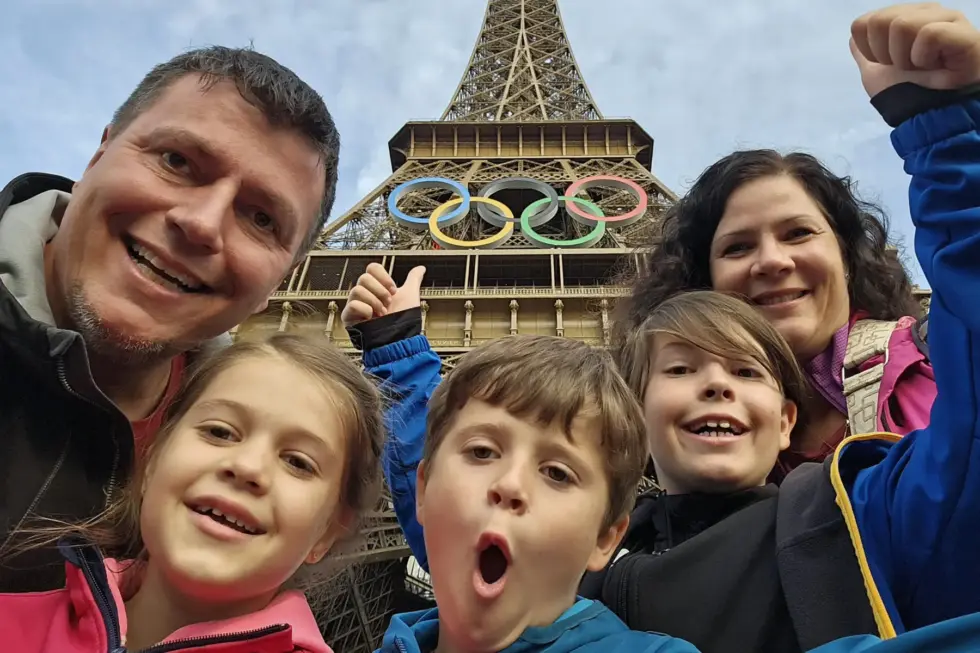
And finally, a personal question: What do you do when you’re not sitting behind your desk at Uhlmann?
In my free time I enjoy being outdoors—whether it’s jogging (admittedly at a very leisurely pace) on my own, going for a walk with my wife, or, more recently, fishing with my eldest son. I recharge my energy in nature. It helps me find balance and inspires fresh perspectives. In my youth, I played electric guitar in a band for many years. I am now trying to pass on my love of music to my three children. And finally, we really enjoy traveling. Last year, we explored France extensively. Spending time with my family is especially important to me—it grounds me and gives me strength to perform my professional duties.