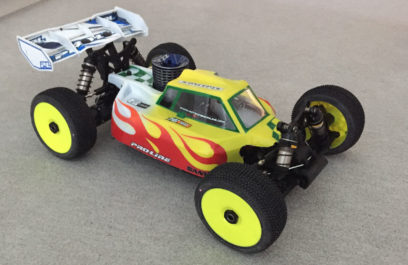
Electric racing
“Radio-controlled (RC) model car racing with an electric motor is governed by the battery. To verify that the driver has not manipulated it, the organizers measure the battery voltage prior to a race. They also weigh the e-cars because they must all drive in the same ʻweight class’.
On account of the short running time of the battery, the driving time for an e-race is limited to ten minutes. The cars have to be recharged between the different runs. Battery recharging takes about 30 to 60 minutes. The intervals between races are long for this reason.
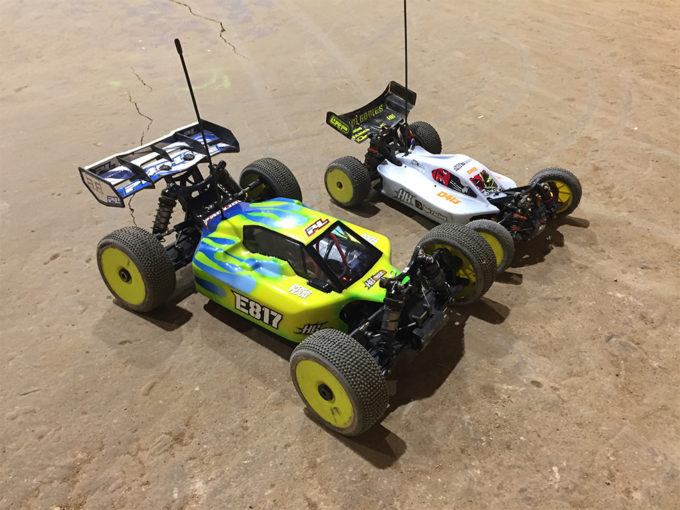
Combustion racing
The tank of a RC model car with a combustion engine may only be filled with 125 millimeters of fuel at the most for a race. That is also checked by the organizers before the race. The nitromethane fuel mixture in the tank must also comply.
A RC model car drives for about eight minutes with such a tank. During a regional race, such as the Baden-Württemberg championship which lasts 30 to 40 minutes, around four pit stops are needed to reach the finishing line. The driver has to have a helper for refueling. It would otherwise take much too long for the driver to leave his elevated position next to the track, from where he controls the car, to get to the pits each time. I always get a friend to help. He also fetches the car and restarts it should the motor stop during a race.
The engine sound of the RC combustion model cars is similar to that in Formula One or German Touring Masters (DTM) motorsport. The exhaust must comply with specific standards to rule out excessive noise. Before a competition, the judges check the authorization number of each exhaust for this reason.
I personally prefer racing with a combustion engine. It is more exciting – due to the pit stops and because the car has to endure more, which means that parts may fail more often. Furthermore, the stress of battery charging does not apply here.”