Carolyn Leung is Sustainability Manager and, together with trainee Lea Steilen, ensures that the Uhlmann Group does its utmost to protect our planet. Since October, the two have been developing our Group-wide climate strategy together with representatives from the Group companies. “Embedded in our 4ward25 strategy, we are thus laying the foundation for Group-wide collaboration to install an overarching climate strategy for the Uhlmann Group,” says Leung.
The fact that Uhlmann is taking this issue so seriously is not purely out of a sense of moral obligation. Today, sustainable practices give companies a competitive edge: “This issue is high on the agenda of all customers from the pharmaceutical, food, and consumer goods industries, and something they actively seek,” explains Lea Steilen.
Customers seek this issue actively.
Lea Steilen, Trainee Sustainability Management
Collecting data
But how do you go about developing a climate strategy? “The first step we took was to hold workshops and discuss this issue with the managing directors of the individual Group companies,” says Leung. The next step involved appointing so-called “Carbon Managers” for each Group Company. Their job is to collect and evaluate relevant data from the individual companies, like on CO2 emissions. Because we can only take appropriate action if we can identify where and just how much CO2 is being emitted by each company.
Based on the emissions, ambition levels are then set for the individual sites and the company as a whole. This is done in tandem with the company management. Project Manager Leung and Lea Steilen themselves each have a dual function: “Firstly, we ourselves are the Sustainability and Carbon Managers for Uhlmann Pac-Systeme. And secondly, we also manage the climate strategy project for the entire Group,” says Steilen.

Ambitious goals for climate protection
The strategy should be in place by the end of the business year, i.e., on March 31. However, it is not intended to be a rigid framework, as Steilen says: “We are aware that external circumstances can vary greatly from one Group Company to the next. That’s why we want to allow as much flexibility as possible in implementing the individual climate protection measures.” While other companies rely, say, on offsetting their CO2 emissions by purchasing “pollution licenses”, the Uhlmann Group is clearly committed to avoiding the greenhouse gas wherever possible. “We want to do it right first time,” says Steilen.
To achieve this, the team is looking at three areas, known as scopes: Scope 1 covers emissions that occur directly within the company – for example, those from our vehicle fleet. Scope 2 relates to indirect emissions, such as those caused by the generation of purchased energy. Finally, Scope 3 deals with emissions that occur in upstream or downstream processes, for example in the purchase of materials, in logistics and in the operation of machinery. “The biggest challenge is to collect the Scope 3 emissions,” says Leung. “So at present we are analyzing the value chain and determining where and exactly what emissions are generated. We will then use these to develop an appropriate emissions reduction plan.”
Raising employee awareness
And what can the individual entities do to support this? “A large part of our work is about raising awareness among employees, because every department must play an active role in the transformation.
To reduce upstream and downstream emissions, for example, it is essential to work closely with suppliers and systematically analyze supply chains,” explains Leung. “As a company, we are also responsible for the emissions that are generated by the supplier – from the extraction and processing of raw materials right down to the transportation and delivery of goods to our sites. Incidentally, the way we design our own products can have a sustainable impact on lowering emissions in the supply chain, in manufacturing and during operation.”
Commitment to sustainability at Uhlmann
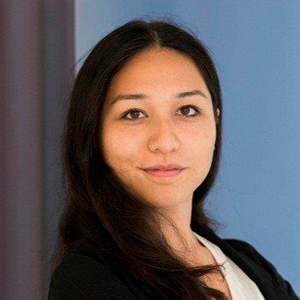
Carolyn Leung joined Uhlmann in October 2021. As Sustainability Manager, she can draw from the experience gained at other companies where she worked in a similar role. Her job and that of the extended sustainability team is to use the climate strategy to make Uhlmann more sustainable in all
areas of the Group.
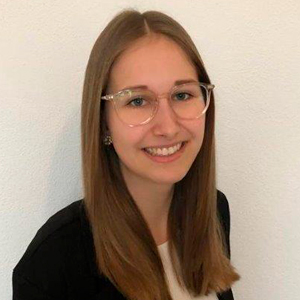
Lea Steilen started off at Uhlmann as a trainee in September 2021 after completing her bachelor’s degree in Environmental and Business Management. Her strategic focus is on assessing the carbon footprint of our products.
The Uhlmann Pac Systeme Sustainability Management team reports to Matthias Kaiser, Director Portfolio Strategy, Marketing & Sustainability.